


How This Article Was Put Together
This list was put together by researching the small-talk topics introverts actually find manageable — low-pressure, easy to answer, and kind to quiet energy — and grouping them by setting: everyday life, work, social gatherings, and one-to-one chats. Each topic was checked for clarity, low social pressure, and ease of answering without oversharing, and duplicates were removed. Pick a topic that fits the moment; you don’t need to prepare all 101. Written by the 101Thing team and reviewed for clarity and safety.
About This Article
This article is part of the 101 Thing library of practical lists and guides, and it focuses on small Talk Topics for Introverts. Its sections — including “101 Small Talk Topics for Introverts (Low-Pressure Starters)” and “Why Small Talk Feels Harder for Introverts” — are organised so you can jump straight to the part that matches your situation and use it right away. Treat everything here as a starting point rather than a script: adapt the wording to your own voice, skip anything that does not fit, and put your own experience ahead of any list. We update our articles when we find errors or a better approach, and readers are welcome to suggest corrections through our contact page. For more on how we research and check the content we publish, see our Editorial Policy.
101 Small Talk Topics for Introverts (Low-Pressure Starters)
Small talk can feel like a performance — especially if you are an introvert. You walk into a room, everyone else seems to chat effortlessly, and your mind goes blank. You do not dislike people. You just dislike forced, loud, surface-level chatter that drains you before it even starts.
Good news: you do not need to become an extrovert to be good at small talk. You just need better starters — ones that are short, specific, easy to answer, and kind to both people in the conversation.
This guide gives you exactly that: 101 small talk topics for introverts, organised by situation, plus simple scripts and graceful ways to pause or leave a conversation without guilt.
Use them at work, at parties, in class, at cafés, on Zoom, or in everyday moments like waiting in line. Pick one, try it, and let the conversation be as short or as long as it naturally wants to be.
Why Small Talk Feels Harder for Introverts
For many introverts, small talk is not hard because they lack social skills. It is hard because most small talk is vague, unpredictable, and open-ended — three things that can feel exhausting.
Common worries include:
- “What if I run out of things to say?”
- “What if I ask something awkward?”
- “What if the other person does not want to talk?”
- “What if I get trapped in a long conversation I cannot exit?”
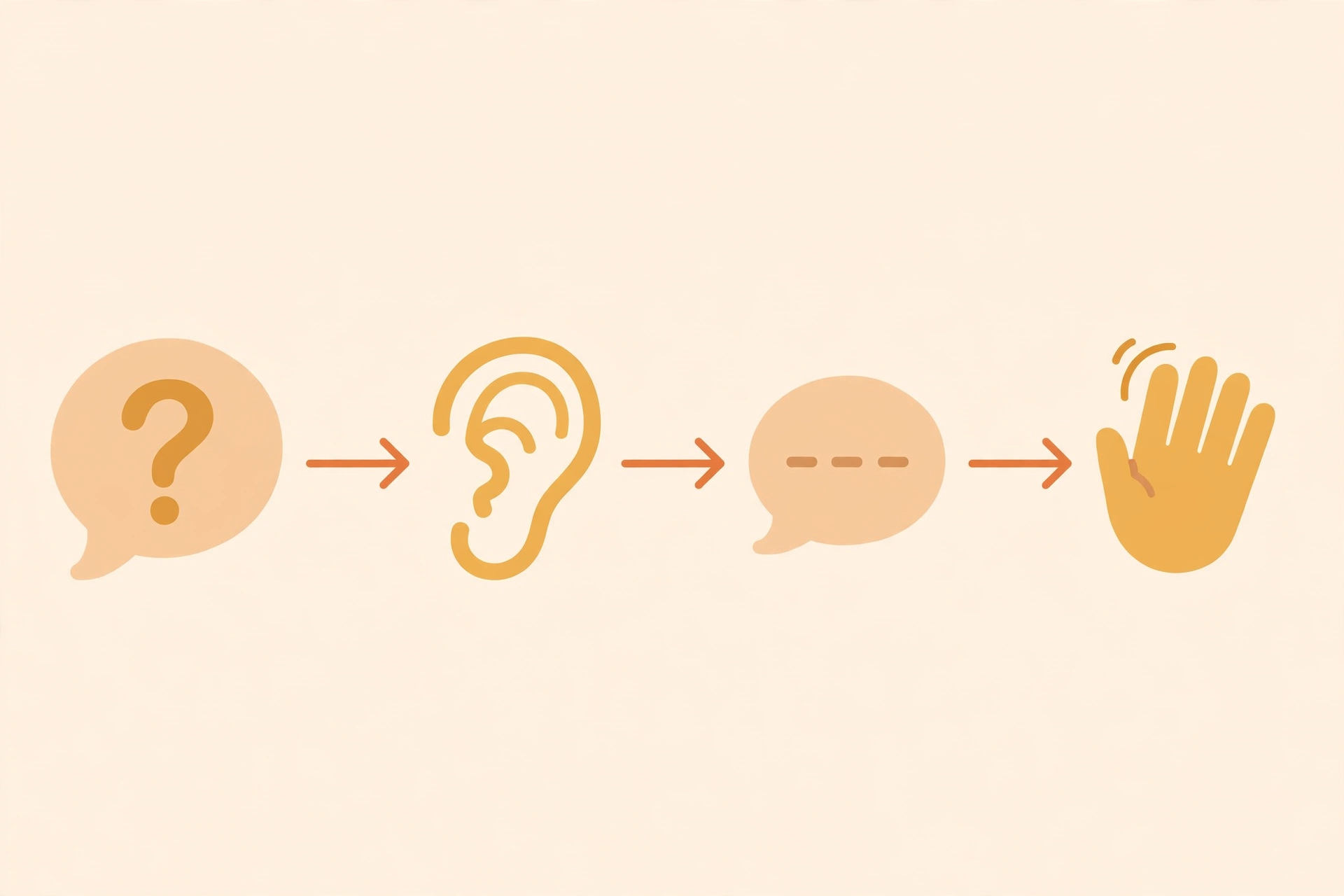
Those worries make sense. The fix is not to talk more. It is to talk with more structure: one clear opener, one easy question, and permission to pause or exit at any time.
Think of small talk as a low-stakes invitation, not an interview. You are offering a small doorway. The other person can step through it, or not — and either response is fine.
If you want more playful options for group settings, you might also like 101 Funny Icebreaker Questions for Work Meetings. For one-to-one moments with someone new, see How to Start a Conversation With a Stranger Without Being Awkward.
5 Low-Pressure Principles for Introvert-Friendly Small Talk
Before the list, keep these five principles in mind. They make every topic below work better.
1. Keep it short and specific
Vague questions (“So… what’s up?”) are hard to answer. Specific questions (“Have you watched anything good lately?”) are easier because they give the other person something concrete to respond to.
2. Ask questions that are easy to answer
Choose topics with no wrong answer. Favourite foods, recent weekends, local recommendations, and simple preferences are safe because they do not require expertise, opinions on sensitive subjects, or personal disclosure.
3. Share a little, then ask
This is the introvert-friendly formula: share-then-ask.
Instead of only asking: “Do you like this café?”
Try: “I come here for the quiet corner and the flat white. Do you have a go-to order here?”
Sharing first makes the exchange feel balanced. It also takes pressure off the other person to carry the conversation alone.
4. Listen for one thread, not the whole story
You do not need to respond to everything. Just listen for one interesting thread — a place, a hobby, a food, a feeling — and follow that one thread with a follow-up question.
Example:
Them: “I spent the weekend helping my sister move.”
You: “Oh, moving weekend — that’s a workout. Was it across town or a bigger move?”
One thread is enough.
5. Give yourself permission to pause or exit
Not every conversation needs to become a deep friendship. A 60-second friendly exchange is a complete success.
You can pause with: “That’s lovely — I’m going to enjoy my coffee for a bit, but it was nice chatting.”
You can exit with: “I should head off, but it was really nice meeting you.”
Having an exit line ready actually makes it easier to start, because you know you are not trapped.
Introvert tip: You do not need to use all 101 topics. Bookmark this page, pick 5–10 that feel natural to you, and practise those first. Familiarity beats variety.
Easy Openers (1–15)
These are best for first moments: waiting rooms, cafés, parties, events, queues, and meeting someone for the first time. They are light, situational, and easy to answer or politely pass on.
1. “Hi, I’m [your name] — how’s your day going so far?”
Say your name first — it removes the hardest part, which is starting. Use it in the first five minutes before overthinking kicks in.
2. “Have you been here before, or is this your first time too?”
Shared newness is instant common ground. Either answer gives you something natural to react to.
3. “That coffee smells amazing — do you have a go-to order here?”
Sensory openers (smell, taste, sound) feel natural because you’re reacting to something real, not performing.
4. “I love that bag / jacket — where did you find it?”
Specific compliments beat generic ones — and ‘where did you find it’ turns a compliment into a conversation.
5. “How’s your week been — busy, calm, or somewhere in between?”
The three options make honesty easy. It signals you’re actually listening, not just filling silence.
6. “Did you come here with friends, or are you flying solo today?”
This gently maps the social situation — and ‘flying solo’ normalizes being alone, which fellow introverts appreciate.
7. “This weather has been something — are you enjoying it or counting down to a change?”
Weather works when you give it an opinion angle — ‘enjoying it or counting down’ invites a real take, not just ‘yeah, crazy.’
8. “Have you tried anything good from the menu here yet?”
‘Yet’ includes newcomers and regulars alike — and food recommendations are the easiest conversation fuel.
9. “I noticed you’re reading [book] — how are you finding it?”
Noticing what someone’s already doing is the lowest-pressure opener there is — you’re joining their world, not interrupting it.
10. “Is this your usual spot, or are you just passing through?”
Either answer gives you a thread: regulars have recommendations, visitors have stories. Follow the thread they offer.
11. “How did your morning go — smooth start or chaotic?”
The two-option format makes it easy to answer without thinking. People love picking a side, even a silly one.
12. “Are you local, or just visiting the area?”
This opens two good paths at once — local tips or travel stories — and neither requires personal disclosure.
13. “That song playing is great — do you know who it is?”
Commenting on shared surroundings is the safest opener: you’re both experiencing it, so there’s no cold start.
14. “Did you catch that [event / news moment] everyone was talking about?”
Shared moments of the week give you instant common ground. Keep it light — you’re bonding, not debating.
15. “Mind if I sit here? I promise low-key company.”
Naming yourself ‘low-key company’ is disarming honesty — it tells a fellow introvert you’re safe to sit near.
Work & Study (16–30)
Work small talk works best when it stays curious rather than competitive. Ask about what people enjoy, what they are learning, and how they recharge — not just job titles and deadlines. These also work well for virtual meetings. For more remote-friendly options, see 101 Icebreaker Questions for Zoom Meetings.
16. “What do you do — and what part of it do you actually enjoy?”
The second half rescues this from small-talk hell — ‘what part do you enjoy’ asks for the human story, not the job title.
17. “How long have you been in your current role?”
Tenure questions are safe because they’re factual — follow with ‘what’s changed since you started’ to go deeper.
18. “What’s your workday looking like today — meetings galore or focus time?”
The two-option frame makes it playful — and you’ll instantly learn whether they’re drowning or coasting.
19. “Are you working on anything interesting right now?”
‘Interesting’ is the magic word — it filters for the part of work they actually care about.
20. “What made you choose your field?”
Origin stories reveal values — listen for what drew them in, because that’s the thread to pull.
21. “Do you work from home, in an office, or a mix?”
Work-location chat is the modern small talk staple — everyone has opinions and a setup to describe.
22. “What’s the best part of your job that people wouldn’t guess?”
‘Wouldn’t guess’ invites the hidden perk or secret joy — always more interesting than the job description.
23. “Have you learned anything useful at work lately?”
‘Lately’ and ‘useful’ keep it concrete — you’ll get a real tip, not a vague philosophy.
24. “What’s one tool or shortcut that makes your workday easier?”
Practical questions get practical answers — and swapping shortcuts feels like trading gifts.
25. “Are you studying anything at the moment, or thinking about it?”
The ‘or thinking about it’ catches the curious-but-hesitant — learning dreams are great conversation.
26. “What was your favourite subject at school — and does it still show up in your life?”
School nostalgia is warm territory — and the second half connects past to present, which deepens it.
27. “Do you have a dream project you’d love to work on someday?”
‘Someday’ makes ambition safe to admit — you’ll hear what they’d do if fear weren’t a factor.
28. “What’s your ideal work schedule if you could design it?”
Fantasy scheduling reveals priorities — early bird, night owl, four-day week — with zero judgment.
29. “How do you usually recharge after a long workday?”
This quietly asks about their introvert/extrovert wiring — and ‘usually’ invites the honest routine, not the aspirational one.
30. “What’s one small win you’ve had at work recently?”
‘Small’ and ‘recently’ make this answerable — and celebrating tiny wins together builds quick warmth.
Everyday Life (31–45)
Everyday topics are the backbone of low-pressure small talk. They are relatable, low-stakes, and easy to keep short. Use them with neighbours, colleagues, acquaintances, and people you see regularly but do not know well yet.
31. “Have you watched anything good lately?”
‘Lately’ keeps it current — and ‘good’ is subjective enough that any answer leads somewhere.
32. “Read any good books recently — or are you in a reading slump like me?”
Admitting your own slump first makes this feel like commiseration, not a quiz — fellow readers will bond instantly.
33. “Do you have any shows you’re saving for a quiet night in?”
‘Quiet night in’ signals you’re a homebody too — it’s a bat signal for fellow introverts.
34. “What’s your go-to comfort meal when you don’t feel like cooking?”
Comfort food is personal and evocative — you’ll get cravings, childhood memories, or both.
35. “Are you a morning person, night owl, or permanently tired?”
The third option (‘permanently tired’) is the joke that makes this work — it gives everyone a fun answer.
36. “Have you been on any good walks or day trips lately?”
‘Lately’ keeps it current and easy — no life story required, just a recent pleasant memory.
37. “What’s your favourite way to spend a slow weekend?”
Asking about the ideal, not the actual, weekend skips any awkwardness about busy or lonely weekends.
38. “Do you cook much, or are you more of a takeaway connoisseur?”
The playful framing (‘connoisseur’) makes either answer charming — no one’s judging a frozen pizza here.
39. “Have you tried any new restaurants or cafés recently?”
Food discoveries are universally relatable and often lead to swapping recommendations — a natural conversation extender.
40. “What’s your favourite season — and what do you love about it?”
The follow-up (‘what do you love about it’) is what turns a one-word answer into a real conversation.
41. “Do you have any pets, or are you more of an admirer from afar?”
The ‘admirer from afar’ option means pet-free people can still play along — nobody’s left out.
42. “What’s your ideal way to spend an hour of free time?”
One hour is specific enough to get a real answer instead of a vague ‘oh, I dunno, relax.’
43. “Have you picked up any new hobbies lately?”
‘Lately’ plus ‘new’ keeps the stakes low — dabbling counts, mastery not required.
44. “What’s something small that made your day better this week?”
Small and recent beats big and life-changing — it’s answerable in ten seconds and always positive.
45. “Do you prefer staying in or going out when you need to recharge?”
This one quietly signals you’re an introvert too — instant solidarity if they pick ‘staying in.’
Getting to Know Someone (46–60)
Once a first exchange feels comfortable, these questions help you move from polite chat to genuine connection — without jumping into anything too personal. They are especially useful for new friends, new colleagues, dates, and repeated acquaintances.
46. “Where did you grow up?”
A classic that works because everyone’s answer is a story, not a fact. Follow up with what it was like there.
47. “What brought you to this area?”
Everyone’s move has a reason — a job, a person, an accident — and the reason is always more interesting than the place.
48. “What’s something you’re looking forward to right now?”
Future-focused questions put people in a good mood. You’ll learn what they value by what excites them.
49. “If you could live anywhere for a year, where would you pick?”
The one-year limit makes it playful rather than a life-planning exercise — fantasy, not commitment.
50. “What’s a place you’ve visited that you’d love to go back to?”
‘Go back to’ filters for places with emotional resonance — you’ll hear the story, not the itinerary.
51. “Do you have a favourite holiday or travel memory?”
Travel memories are almost always happy ones. Ask what made that trip special to go deeper.
52. “What’s a skill you’d love to learn if time wasn’t an issue?”
Removing the time barrier unlocks honest answers — this reveals aspirations, not schedules.
53. “What kind of music do you listen to when you need to focus?”
Specific context (‘when you need to focus’) gets a more interesting answer than ‘what music do you like.’
54. “Do you have a favourite podcast or YouTube channel?”
Media recommendations are the introvert’s love language — you’ll likely leave with something to enjoy later.
55. “What’s a movie you could watch again and again?”
Rewatchable means beloved — ask what it is about that film that keeps pulling them back.
56. “Who’s someone you admire — famous or not?”
The ‘or not’ matters — it gives permission to name a grandparent instead of a celebrity, which is always the better story.
57. “What’s a small tradition you love — weekly, yearly, or just yours?”
Traditions reveal values. The ‘just yours’ option invites the quirky personal rituals people love describing.
58. “Are you more of a planner or a go-with-the-flow person?”
No wrong answer, and everyone has a strong opinion — plus you’ll learn how they operate.
59. “What’s your favourite way to celebrate something small?”
‘Something small’ is the key — it keeps the answer real and relatable instead of grand.
60. “What’s one thing you’re quietly proud of?”
‘Quietly’ gives permission to brag a little without feeling boastful — most people light up at this one.
Deeper but Still Light (61–75)
Introverts often prefer meaningful conversation over endless surface chatter. These topics go a little deeper while staying gentle, positive, and optional. The other person can answer briefly or share more — both are fine. Avoid using these with strangers in rushed settings; save them for when there is already a little rapport.
61. “What’s a lesson you’ve learned in the last year?”
Recent lessons feel relevant and shareable — it’s wisdom without the lecture.
62. “What’s something that used to stress you out but doesn’t anymore?”
This celebrates growth. You’ll hear about resilience, which builds real connection fast.
63. “What does a good day look like for you now?”
‘Now’ acknowledges life changes — it invites the current truth, not the Instagram version.
64. “What’s a piece of advice that actually stuck with you?”
‘Actually stuck’ filters out platitudes — you’ll get the one line they really live by.
65. “What helps you feel calm when life gets noisy?”
This normalizes needing calm — an introvert-friendly question that often gets an honest, thoughtful answer.
66. “What’s something you believed as a kid that makes you smile now?”
Childhood beliefs are funny and disarming — this one reliably gets a laugh and a story.
67. “What’s a goal you’re working toward — big or tiny?”
‘Big or tiny’ removes the pressure to sound ambitious — small goals count and are often more interesting.
68. “What’s something you’re trying to do more of this year?”
Forward-looking and positive — you’ll learn what they value without asking anything heavy.
69. “What’s something you’re trying to do less of?”
The honest answers here (doomscrolling, saying yes) create instant relatability — everyone’s fighting something.
70. “What makes you feel most like yourself?”
This is a deeper question disguised as a simple one — save it for when the conversation’s already flowing.
71. “What’s a kindness someone showed you that you still remember?”
Gratitude stories are warm and memorable — this question tends to slow the conversation down in a good way.
72. “What’s a book, song, or film that changed how you see something?”
Three options means everyone can answer — and ‘changed how you see’ promises a story, not just a title.
73. “What’s something you’ve changed your mind about?”
This signals intellectual honesty is welcome — great for deeper conversations with thoughtful people.
74. “What would your ideal quiet day look like from start to finish?”
An introvert’s dream question — and describing it out loud often makes people realize they should plan one.
75. “What’s one thing you wish more people understood about introverts?”
Ask this only if they’ve identified as introverted — it’s validating and often sparks a great exchange.
Fun & Light (76–88)
Light, playful topics are great when the mood is relaxed and you want to keep things low-effort. They work at parties, team socials, dinners, and casual group chats — and they often get the best laughs because there is no pressure to be serious.
76. “If you could have any superpower for just one day, what would you pick?”
The one-day limit forces a fun, specific choice — and the why is always better than the what.
77. “What’s the most underrated snack of all time?”
Low-stakes debates are perfect for introverts — strong opinions, zero vulnerability required.
78. “If your life had a theme song, what would it be?”
Playful and revealing — the song choice says a lot, and the follow-up writes itself.
79. “What’s the best worst joke you know?”
‘Best worst’ gives full permission to be gloriously unfunny — the groans are the point.
80. “If you could teleport to dinner anywhere tonight, where would you go?”
Tonight keeps it immediate and sensory — you’ll get cravings and memories, not travel plans.
81. “What’s your most controversial food opinion?”
Food controversies are the safest heated debates — passionate but consequence-free.
82. “If you won a tiny lottery — just enough for one treat — what would you buy?”
‘Tiny’ and ‘one treat’ make this about small joys — the answers are always charming and specific.
83. “What’s the strangest thing you’ve ever Googled?”
Everyone has one, and sharing it is a small act of trust — this bonds people fast.
84. “If you could swap jobs with anyone for a week, who would it be?”
One week keeps it fantasy — you’ll learn what fascinates them without career-counseling territory.
85. “What’s a game you never get tired of?”
Games reveal how people like to think and play — and you might discover a shared obsession.
86. “If you could invite three people — anyone, alive or not — to coffee, who would you choose?”
The guest list reveals heroes, values, and curiosity — ask why each person made the cut.
87. “What’s your go-to karaoke song, even if you’d only sing it alone?”
‘Even if alone’ removes the performance pressure — it’s about the song you love, not the stage.
88. “What’s the funniest thing that’s happened to you recently?”
‘Recently’ keeps it fresh and tellable — recent stories come out better than ancient ones.
Closers & Kind Exits (89–101)
Knowing how to end a conversation kindly is just as important as knowing how to start one. These closers help you wrap up warmly, thank the other person, and leave without awkwardness. Use them when you need a break, have somewhere to be, or simply feel your social battery running low.
89. “This was really nice chatting — what’s your name again?”
Asking again is fine — it shows you want to remember them, which matters more than getting it right the first time.
90. “I loved hearing about [topic] — thanks for sharing that.”
Naming the specific topic proves you were listening — generic thanks don’t land the same way.
91. “I’m going to grab another coffee — it was lovely talking to you.”
A concrete reason plus warmth — the exit feels natural, not like an escape.
92. “I should let you get back to your day, but this was a pleasure.”
Framing the exit as consideration for THEM makes leaving feel kind, not awkward.
93. “Let’s definitely continue this another time — are you usually here?”
Plants the seed for a next time without pressure — ‘are you usually here’ keeps it casual and location-based.
94. “I’m going to go recharge for a bit, but I enjoyed this.”
‘Recharge’ is honest introvert language — owning it confidently makes the exit feel natural, not rude.
95. “Before I go — do you have any recommendations for [topic we discussed]?”
Ending with a question about THEIR expertise leaves them feeling valued — the last impression is warmth.
96. “It was so good meeting you — hope the rest of your day is gentle.”
‘Gentle’ is a distinctly kind wish — it’s memorable precisely because nobody says it.
97. “I don’t want to keep you — but thanks for the lovely chat.”
Framing the exit as consideration for them (not escape for you) is the politest goodbye there is.
98. “I’m heading off now — take care, and good luck with [their thing].”
Referencing their thing proves you listened — that’s what turns a chat into a connection.
99. “This was a nice break in my day — thank you.”
Calling it ‘a nice break’ is honest and warm — gratitude without overstatement.
100. “If you’re ever up for another chat, I’ll be around.”
Low-pressure and open-ended — the ball’s in their court, which is exactly how introverts like it.
101. “Wishing you a calm rest of your day — see you around.”
Short, warm, done — the perfect introvert goodbye: kind without being clingy.
Short Scripts: How to Start, Keep Going, and Exit
Having a topic is helpful. Having a short script is even better. Here are three simple templates you can reuse.
Script 1: Starting with a stranger at a café or event
You: “Hi, I’m [your name]. Have you been here before, or is this your first time too?”
>
Them: “First time — I just moved nearby.”
>
You: “Welcome to the area! I come here when I need a quiet corner. Have you found any good spots yet?”
Why it works: It is short, situational, and uses share-then-ask. You shared a small detail about yourself, then asked an easy follow-up.
Script 2: Keeping a work conversation going
Them: “My week has been nonstop meetings.”
>
You: “That sounds draining. Do you get any focus time between them, or is it back-to-back?”
>
Them: “Mostly back-to-back, honestly.”
>
You: “I get that. How do you usually recharge after a day like that?”
Why it works: You acknowledged their feeling, asked one follow-up, and then moved to a gentle, positive topic (recharging) instead of staying stuck on complaints.
Script 3: Exiting gracefully
You: “I’ve really enjoyed chatting — I’m going to head off and recharge for a bit, but it was lovely meeting you.”
>
Them: “You too!”
>
You: “Hope the rest of your day is calm. See you around.”
Why it works: It is warm, honest, and clear. You do not need a detailed excuse. “I’m going to recharge” is enough, and most people understand it immediately.
If the conversation stalls
Silence is not failure. You can:
- Smile and say: “Anyway, it was nice chatting — I’ll let you get on.”
- Return to the topic: “Going back to what you said about [topic] — what made you pick that?”
- Offer a simple closer: “Well, I’ll let you enjoy your [coffee / event / break]. Take care!”
You do not need to rescue every pause.
How to Exit Gracefully Without Feeling Guilty
Many introverts avoid starting conversations because they worry they will not be able to leave them. Having exit lines ready solves that.
Use this simple structure:
Appreciate + Reason (optional) + Well-wish
- Appreciate: “It was lovely chatting.”
- Reason (optional): “I’m going to grab some water / head off / recharge for a bit.”
- Well-wish: “Hope you enjoy the rest of the event.”
Examples:
- “This was lovely — I’m going to go say hi to a friend, but I hope you enjoy the rest of your evening.”
- “I should head off, but thanks for the chat. Good luck with your move!”
- “I’m going to take a little quiet break, but it was really nice meeting you.”
You do not owe anyone a long explanation. A kind, brief exit is respectful — not rude.
About this article: the 101Thing team researched small-talk topics suited to introverts, grouped them by setting, and reviewed each one for clarity and low pressure.
FAQ
What if someone doesn’t want to talk?
That is okay, and it is not a reflection of you. Look for brief answers, no eye contact, headphones, or body language turned away. If you notice those signs, you can say: “No worries — I’ll let you enjoy your day. Take care!” Then move on kindly. A polite exit still counts as good social skills.
How long should small talk last?
As long as it feels comfortable for both people. A friendly exchange can be 30 seconds or 20 minutes. There is no required length. If you are enjoying it, keep going. If your energy dips, use one of the closers in 89–101 to wrap up warmly.
What if I run out of things to say?
Use the one-thread rule: pick one detail the other person mentioned and ask a follow-up about it. If nothing comes to mind, it is fine to pause the conversation. Try: “It was nice chatting — I’m going to enjoy a quiet moment, but I hope you have a good day.” Running out of words does not mean you failed.
Can introverts get better at small talk without pretending to be extroverts?
Yes. You do not need to be louder, faster, or more outgoing. You just need a few reliable starters, a simple follow-up habit, and permission to keep conversations short. Many people actually prefer calm, thoughtful small talk over high-energy chatter. Start small, practise with low-stakes moments, and let your style stay yours.
A Final Note for Introverts
Small talk is not about impressing people. It is about offering a small moment of connection — a friendly hello, a shared laugh, a recommendation, a kind exit.
You do not need to talk to everyone. You do not need to stay for hours. You just need one low-pressure opener and the freedom to leave when you are ready.
Pick one topic from this list today. Try it in a low-stakes moment. Notice how it feels. Then pick another tomorrow.
Calm, kind, and brief is more than enough.
Sources & Further Reading
Want to go deeper? These sources offer useful background on the topic above.
- Case Western Reserve Observer — On Small Talk, Awkwardness and the Fear of Social Interaction — Explores why small talk can feel draining and how listening can ease the pressure to fill every silence.
- Psychology Today — 5 Skills for Making Friends as an Adult — Outlines skills that help introverts and others start conversations without forcing themselves to be extroverted.

101Thing publishes practical guides and lists that help readers try new ideas, start conversations, and make everyday life a little better. Articles are researched, written, and reviewed for accuracy and usefulness before publication. Questions or corrections can be sent via the Contact page.
 Amna Qamar