


It’s 11 p.m. You have an early start. And you feel… completely awake. Not a yawn in sight.
Here’s the thing most tired-but-wired people get wrong: falling asleep starts hours before your head hits the pillow. Sleepiness isn’t a switch you flip at lights-out — it’s a signal your body builds across the day, through light, temperature, movement and routine. If that signal never gets built, you can lie in the dark feeling alert for a long, frustrating time.
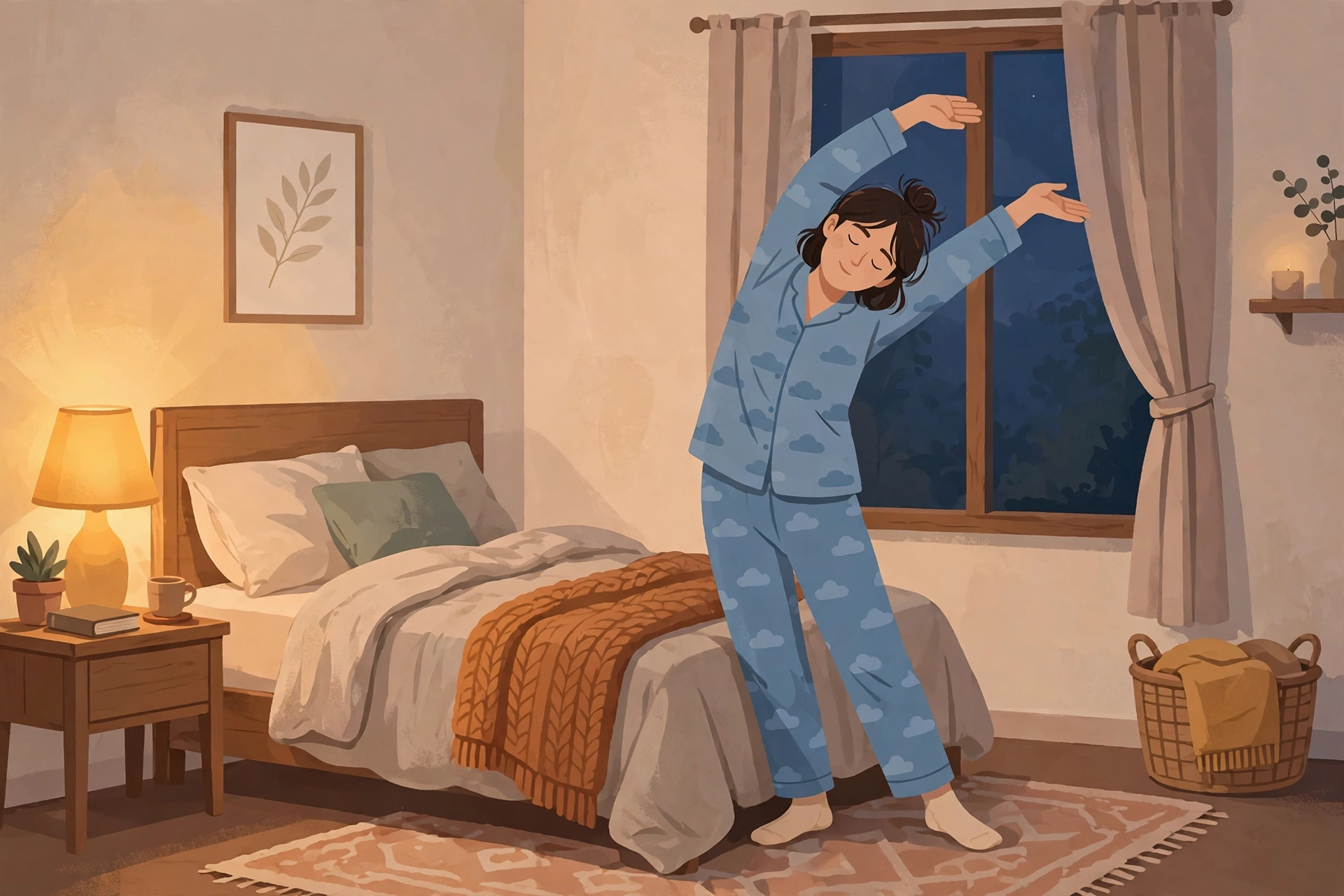
This guide is about building that signal: how to get tired fast in the hours before bed. (If you’re already in bed, already tired, and just need help drifting off, our guide on how to fall asleep fast covers in-bed techniques like slow breathing. This one is the warm-up act.)
Why You Don’t Feel Tired (Even When It’s Late)
Your body runs on a roughly 24-hour internal clock. Two things tell that clock it’s bedtime: rising melatonin (the hormone that makes you drowsy) and a slow build-up of sleep pressure — the longer you’re awake and active, the stronger it gets.
Modern evenings sabotage both. Bright lamps and phone screens delay melatonin. Afternoon caffeine blocks the sleep-pressure signal. A late nap spends it early. An irregular wake-up time leaves your clock guessing. And a busy, racing mind keeps your body in “daytime mode” long after the day is done.
The good news? Every one of those is fixable tonight. Work through the methods below — most people only need three or four of them.
15 Ways to Feel Sleepy Before Bed
1. Get Bright Light Early in the Day
Step outside within an hour or two of waking up, even for ten minutes. Morning daylight is the strongest “reset” signal your body clock gets, and it sets a timer: melatonin rises roughly 14–16 hours later, right when you want to feel sleepy. A grey day still beats indoor lighting — outdoor light is far brighter than anything in your kitchen.
2. Move Your Body — But Not Too Late
Exercise builds genuine sleep pressure and helps you feel properly tired by night. Aim for activity during the day or early evening: a brisk walk, a swim, a workout, even a vigorous tidy-up counts. Just finish anything strenuous at least two to three hours before bed, because a hard late workout raises your body temperature and adrenaline, which can leave you buzzing instead of sleepy.
3. Set a Caffeine Curfew
Caffeine works by blocking the very chemical (adenosine) that makes you feel tired — so a 4 p.m. coffee can still be pushing back against sleepiness at 10 p.m. Set your last coffee, tea, energy drink or cola for early afternoon, around 2 p.m. at the latest, and earlier if you know you’re sensitive. It’s the cheapest sleep fix there is: it costs you nothing but a slightly earlier cup.
4. Keep a Consistent Wake-Up Time
Pick a wake-up time and stick to it every day, weekends included. A steady wake time anchors your whole clock, and sleepiness starts arriving at a predictable hour in the evening. Sleeping in until noon on Sunday feels lovely — then Sunday night arrives and you’re wide awake at midnight wondering why.
5. Guard Your Naps
A nap is a withdrawal from your sleepiness account. If you nap, keep it short (20–30 minutes) and early in the afternoon. If you’re regularly struggling to feel tired at night, skip naps for a week and see whether your evenings improve — many people find this one change does most of the work.
6. Dim the Lights After Dinner
About an hour or two before bed, switch off the big overhead lights and use low lamps instead. Falling light levels are your body’s cue to start releasing melatonin. You don’t need to sit in the dark like a vampire — just noticeably dimmer than daytime, the way the evening would naturally look without electric light.
7. Park Your Screens an Hour Before Bed
Phones, tablets and laptops blast bright light at your face and serve up content designed to keep you alert and scrolling. Charge your phone outside the bedroom for the last hour, or at minimum switch on night mode and choose something calm. Your group chat will survive without you until morning.
8. Build a Wind-Down Routine
Do the same calm steps in the same order every night: lock up, brush teeth, change into sleep clothes, read a few pages. Repetition turns the routine itself into a sleep signal — your body starts winding down at step one. Thirty minutes is plenty; an hour is even better. The key is boring and repeatable, not elaborate.
9. Take a Warm Shower
Take a warm (not scalding) shower or bath one to two hours before bed. The warmth opens up blood flow to your skin, and when you step out, your core temperature drops faster than usual — exactly the drop your body makes as it prepares for sleep. Many people find the drowsiness arrives right on cue about half an hour later.
10. Cool Down the Bedroom
Your body needs to shed heat to fall asleep, and a cool room helps it along. The CDC suggests a bedroom temperature between 60 and 67°F (about 16–19°C). If you can’t control the thermostat, try a fan, lighter bedding, or cracking a window for a while before bed.
11. Write Tomorrow’s To-Do List
Keep a notepad by the bed — or better, in the kitchen — and spend five minutes writing down tomorrow’s tasks and anything you’re worried about forgetting. You’re not solving anything tonight; you’re parking it. A racing, list-replaying mind is one of the most common reasons people feel wide awake at bedtime, and getting it onto paper gives your brain permission to stop rehearsing.
12. Read Something Delightfully Boring
Pick up a print book — something pleasant but not gripping. A thriller that demands “one more chapter” is working against you; you want a book your eyelids can win against. Reading in low light is a classic wind-down for a reason: it’s seated, quiet, screen-free, and mildly tiring for your eyes.
13. Sip a Warm, Caffeine-Free Drink
A small mug of chamomile tea or warm milk is a gentle ritual that tells your body the day is ending. Be honest with yourself about the evidence, though: the drink itself isn’t a sedative — the calm, warm, repeated ritual is what helps. Keep it small so you’re not up for a bathroom trip an hour later.
14. Try a Body Scan or Muscle Relaxation
Lie down, breathe slowly, and work from your toes to your forehead: tense each muscle group for about five seconds, then let go. The contrast between tension and release gives your body a clear “stand down” signal, and focusing on one body part at a time leaves less room for a spinning mind. There are plenty of free guided versions if you’d rather listen than improvise.
15. If You’re Not Sleepy, Get Up
This one feels backwards, but it matters: don’t lie in bed wide awake for half an hour, getting more frustrated. If sleepiness hasn’t arrived after roughly 20 minutes, get up, go to another room, keep the lights low, and read or listen to something calm. Head back to bed only when your eyes feel heavy. Your bed should stay strongly linked with sleep, not with tossing, turning and clock-watching.
What NOT to Do When You’re Trying to Get Tired
- Don’t scroll in bed. Working, gaming and doomscrolling under the duvet teaches your brain that bed is a place for being awake and stimulated.
- Skip the nightcap. Alcohol can make you feel drowsy, but it fragments your sleep later in the night, so you wake up less rested. Feeling sleepy and sleeping well aren’t the same thing.
- Avoid heavy meals in the last two to three hours. A big, rich dinner keeps your digestive system busy and can cause discomfort that keeps you alert. A light snack is fine if you’re genuinely hungry.
- Don’t stare at the clock. Counting how little sleep you’ll get only adds pressure. Turn the clock face away.
- Don’t reach for sleep supplements or pills on impulse. Anything that alters sleep is worth a conversation with a doctor or pharmacist first, especially if you take other medication. This article deliberately skips dosing advice — that’s a job for a professional who knows your health history.
For a broader set of habits that support all of this, see our list of 101 tips for better sleep.
When It’s More Than One Bad Night
Everyone gets the odd wired evening, and one bad night is not a medical problem. But talk to a doctor if poor sleep keeps happening for weeks, if you’re so tired in the daytime that it affects work, driving or mood, or if a partner notices loud snoring or pauses in your breathing. Persistent insomnia has proper treatments — cognitive behavioural therapy for insomnia (CBT-I) is the one doctors usually recommend first — and a professional can check whether something else, like a thyroid issue, medication or sleep apnoea, is behind it.
This article is general information about everyday sleep habits. It isn’t medical advice, and it doesn’t diagnose or treat any condition.
Frequently Asked Questions
What’s the fastest way to get tired at night?
There’s no instant off-switch, but the strongest combination for most people is: dim the lights, park your phone, take a warm shower one to two hours before bed, and keep the bedroom cool. Most of these methods work within 30–90 minutes because they’re nudging signals your body already uses, not forcing anything.
Why don’t I feel tired even though it’s late?
The usual suspects are caffeine still in your system, bright light and screens delaying your melatonin, a late or long nap, an irregular wake-up time, or a mind that’s still chewing over the day. Usually it’s two or three of these stacked together, which is why fixing more than one tends to work better than hunting for a single trick.
Does a warm shower really make you sleepy?
Yes — through temperature, not the water itself. The warmth brings blood to your skin, and when you get out, your core temperature drops faster than usual. That drop is one of the signals your body uses to start feeling sleepy, which is why the drowsy feeling often arrives a little while after you get out.
Is it bad to get out of bed if I can’t sleep?
No — it’s one of the most commonly recommended moves. Lying awake and frustrated teaches your brain to associate bed with being alert. Getting up, doing something calm in low light, and returning when you feel drowsy protects that bed-equals-sleep link.
When should I see a doctor about not feeling tired at night?
If it happens most nights for several weeks, if daytime tiredness is affecting your life, or if you snore loudly or gasp in your sleep, book an appointment. Sleep problems like that deserve a proper look rather than more tips from the internet — including ours.
How This Article Was Put Together
This guide was put together by the 101Thing team by reviewing general sleep-hygiene guidance from reputable health sources — including the CDC’s sleep recommendations and hospital sleep-medicine advice — and organising it around one specific question: what makes you feel tired before bed, rather than what helps once you’re already in it. Each method was checked for safety and practicality, and anything involving medication or supplement doses was deliberately left out, because that’s a conversation for a doctor or pharmacist. We haven’t run sleep experiments or tested these methods in a lab; they’re widely recommended habits, presented plainly, with the limits of the evidence stated where it matters.
About This Article
101Thing publishes practical guides and “101” lists that help readers handle everyday life a little better. This article focuses on the evening hours before sleep: 15 everyday ways to build real sleepiness, plus the habits that quietly undo it. It sits alongside our deeper sleep coverage, including our guide to falling asleep fast once you’re in bed and our list of 101 tips for better sleep overall. If you think we’ve got something wrong, or a method here didn’t match your experience, tell us through the Contact page — corrections and reader feedback help us keep these guides honest and useful.
Sources & Further Reading
- How to Improve Your Sleep — CDC (via CDC Stacks) — the CDC’s sleep-hygiene guidance, including the 60–67°F bedroom range, consistent schedules and avoiding electronics before bed.
- Tired of feeling tired? 7 simple ways to improve your sleep — Overlake Medical Center — a sleep medicine specialist’s advice on routines, caffeine, exercise timing and when to seek help.
- Sleep Hygiene — Sleep Foundation — CDC-based sleep and routine guidance for families.

101Thing publishes practical guides and lists that help readers try new ideas, start conversations, and make everyday life a little better. Articles are researched, written, and reviewed for accuracy and usefulness before publication. Questions or corrections can be sent via the Contact page.