

Disclaimer: This article is general information, not medical advice. It does not diagnose, treat, or prescribe for any sleep condition. If you have persistent sleep problems, loud snoring, sleep apnea symptoms, chronic insomnia, or other health concerns, please talk to a doctor or qualified health professional. Do not start, stop, or change any medication based on this article.
Sources & Further Reading
These sources offer more background on the topic above.
- U.S. Department of Veterans Affairs — Good Health Requires Good Sleep — Explains why sleep matters for overall health and shares habits that support better sleep.
- CDC — Sleeping Well — CDC guidance on healthy sleep habits and why getting enough sleep matters.
Introduction
Lying awake in bed, watching the minutes pass, is a frustrating experience. Your body feels tired, but your mind will not quiet down. The more you try to force sleep, the more awake you feel. If this sounds familiar, you are not alone. Many people struggle to fall asleep sometimes, whether because of stress, a busy schedule, a noisy environment, or simply a racing mind.
The good news is that falling asleep faster is often less about trying harder and more about creating the right conditions. Sleep is not something you can force. It is something you invite by calming your body, quieting your mind, and making your bedroom a place that signals rest. Small, consistent changes to your evening routine can make a real difference over time.
This guide covers why it can be hard to fall asleep, how to build a wind-down routine, how to set up your bedroom for sleep, breathing and relaxation techniques you can try, what to avoid in the evening, and what to do if you still cannot sleep after 20 to 30 minutes. It also covers when it is time to talk to a doctor. You do not need to do everything at once. Start with one or two changes, give them time, and build from there.
Sometimes the problem starts earlier in the evening, with a body that simply does not feel tired yet. These ways to make yourself tired fast can help you arrive at bedtime actually sleepy.
How This Article Was Put Together
This guide was put together by researching the sleep habits and wind-down routines commonly recommended in general sleep-health information — consistent schedules, a calming routine, a dark, cool, quiet bedroom, and relaxation techniques. We organized it around why sleep is hard, what to do before bed, what to avoid, and what to do when sleep doesn’t come, and we checked each section for clarity and safety, keeping it general information rather than medical advice. Written by the 101Thing team and reviewed for clarity and safety.
Why You Can’t Fall Asleep
There are many reasons it can be hard to fall asleep, and often more than one is at play. Understanding what might be keeping you awake can help you choose the right fix.
A racing mind. Stress, worry, excitement, or a long to-do list can keep your brain active long after your body is tired. If you lie in bed replaying conversations, planning tomorrow, or worrying about something you cannot control, your mind stays in alert mode. Sleep requires the opposite: a sense of safety and calm.
An inconsistent schedule. Going to bed and waking up at very different times each day can confuse your body’s sleep-wake rhythm. If you stay up late on weekends and then try to fall asleep early on Sunday night, your body may not be ready. A regular schedule helps your body learn when it is time to sleep.
Too much stimulation before bed. Bright screens, intense workouts late in the evening, stimulating conversations, news, or exciting shows can all keep your brain alert. Even if you feel tired, a burst of stimulation right before bed can delay sleep.
An uncomfortable environment. A room that is too warm, too bright, too noisy, or too cluttered can make it harder to fall asleep. Your bedroom should feel calm, cool, dark, and quiet. If it does not, your body may stay on alert.
Caffeine, alcohol, and heavy meals. Caffeine can linger in your system for hours, even if you do not feel wired. Alcohol may make you feel drowsy at first, but it can disrupt sleep later in the night. A heavy or spicy meal close to bedtime can cause discomfort that keeps you awake.
Naps and daytime habits. Long or late naps can reduce your sleep pressure at night, making it harder to fall asleep. Similarly, spending a lot of time in bed during the day — working, watching shows, or scrolling — can weaken the association between your bed and sleep.
Health and medical factors. Pain, breathing difficulties, restless legs, hormonal changes, and certain medications can interfere with sleep. If you suspect a medical cause, or if sleep problems persist, it is important to talk to a doctor rather than trying to solve it on your own.
You do not need to identify a single cause to improve your sleep. Most people benefit from improving their routine, environment, and wind-down habits, regardless of the exact cause. If those changes are not enough, the section on when to see a doctor can help you decide on next steps.
Build a Wind-Down Routine
A wind-down routine is a set of calming activities you do in the 30 to 60 minutes before bed. Its purpose is to signal to your body and mind that the day is ending and it is time to rest. Think of it as a bridge between your busy day and sleep. Without that bridge, you can go from full alertness straight to lying in bed, and your mind may still be running.
A good wind-down routine is simple, enjoyable, and repeatable. It does not need to be long or complicated. Here are some ideas you can mix and match:
- Dim the lights. Lowering the brightness in your home in the evening helps your body recognize that nighttime is approaching. You do not need special bulbs — just turn off overhead lights and use a lamp.
- Put screens away. Try to stop using phones, tablets, and computers 30 to 60 minutes before bed. If you need to use a device, keep the brightness low and avoid stimulating content like news, arguments, or intense shows.
- Do something calming. Read a paper book, listen to soft music, take a warm shower or bath, stretch gently, or do a few minutes of quiet breathing. Choose activities that genuinely relax you, not ones that feel like a chore.
- Write it down. If worries or to-do lists keep you awake, try writing them down before bed. Keep a notebook by your bed and spend five minutes writing down anything on your mind, along with one or two things you will handle tomorrow. Getting it out of your head and onto paper can make it easier to let go.
- Prepare for tomorrow. Lay out clothes, pack a bag, or make a short plan for the next day. Knowing that tomorrow is handled can reduce nighttime worrying.
- Keep it consistent. Try to do your wind-down routine at roughly the same time each night. Consistency helps your body learn the pattern: wind-down means sleep is coming.
It can help to set a gentle alarm or reminder for when to start winding down, not just for when to wake up. If you tend to lose track of time in the evening, a reminder can be a useful nudge.
Be patient with a new routine. It may take a week or two of consistent practice before you notice a difference. That is normal. Your body needs time to learn a new pattern.
Set Up Your Bedroom for Sleep
Your bedroom environment plays a bigger role in sleep than many people realize. A few simple changes can make your room feel more restful.
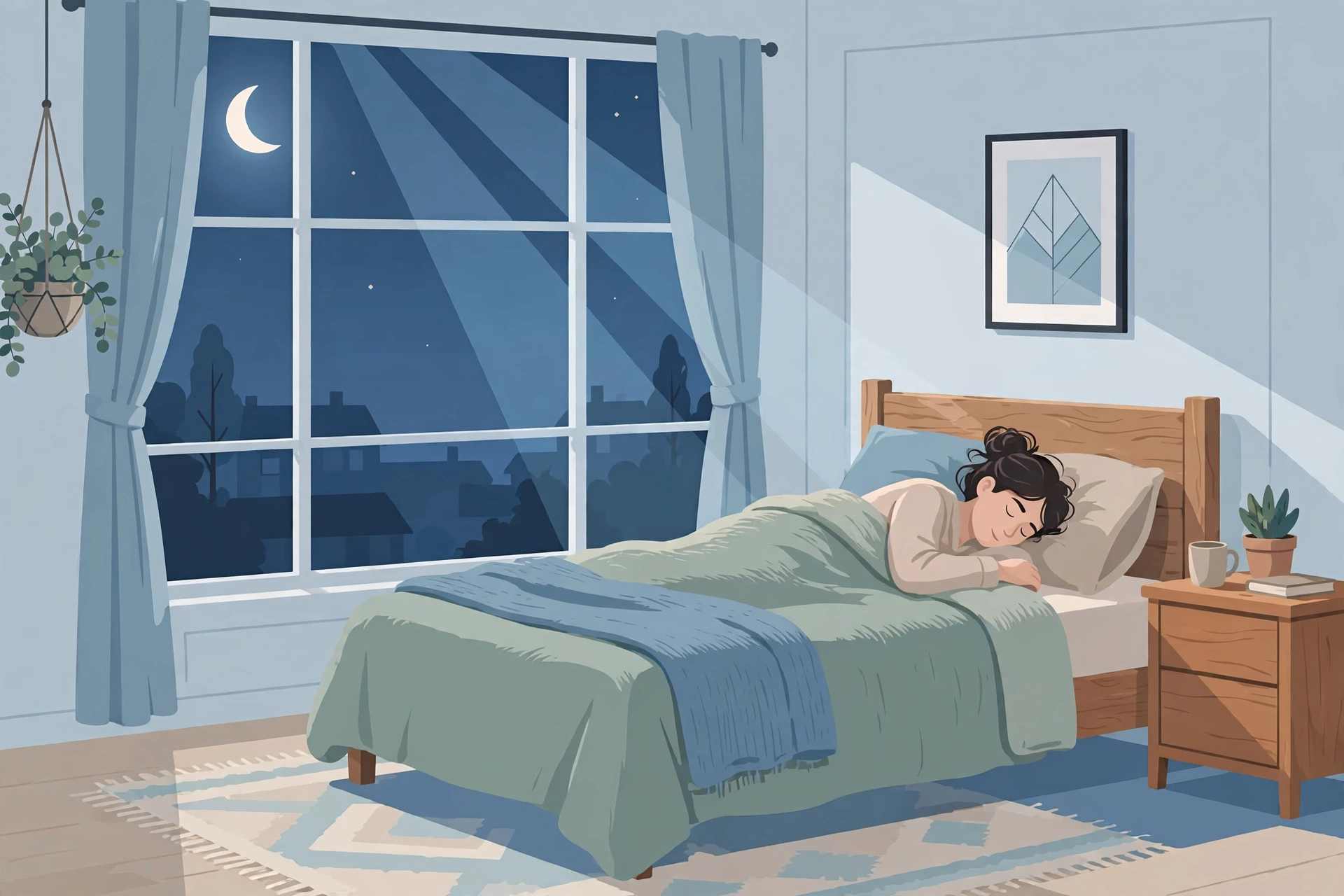
Keep it dark. Darkness helps your body recognize that it is time to sleep. Use blackout curtains or an eye mask if streetlights or early morning light come through your windows. Cover or dim any glowing lights from chargers, devices, or appliances. If you use a nightlight, choose one that is dim and warm.
Keep it cool. Most people sleep better in a cool room. If your room feels stuffy or warm, try opening a window, using a fan, or adjusting your bedding. You do not need a specific temperature — just aim for comfortably cool, not cold and not warm.
Keep it quiet. Noise can keep you awake or wake you up during the night. If you live in a noisy area, earplugs or a white noise machine can help. A fan can also provide steady background sound. Avoid falling asleep with the TV on, since sudden changes in volume can disrupt sleep.
Keep it comfortable. Your mattress, pillows, and bedding should feel comfortable and supportive. You do not need expensive bedding to sleep well, but if your pillow is flat, your mattress is uncomfortable, or your blankets are too heavy or too light, it is worth adjusting. Choose bedding that keeps you comfortable through the night.
Keep it tidy and calm. A cluttered, chaotic bedroom can make it harder to relax. You do not need a perfect room, but clearing surfaces, putting away clothes, and keeping your bed made can help your room feel like a place for rest rather than a place for stress.
Reserve your bed for sleep. If possible, avoid working, studying, or watching shows in bed. When you use your bed only for sleep (and rest), your brain builds a stronger association: bed means sleep. If you live in a small space and cannot avoid using your bed during the day, try to at least sit in a chair or at a desk for work and screen time, and use your bed only when you are ready to sleep.
If you share a bedroom, talk with your partner or roommate about sleep habits. Different schedules, snoring, or different preferences for light and temperature can all affect sleep. Small compromises — like using earplugs, staggering bedtimes, or using separate blankets — can make a big difference.
Breathing and Relaxation Techniques
When your mind is racing, breathing and relaxation techniques can help you shift from alert mode to rest mode. These techniques do not require special equipment, and you can try them in bed. The key is to focus on your breath and body, not on trying to force sleep.
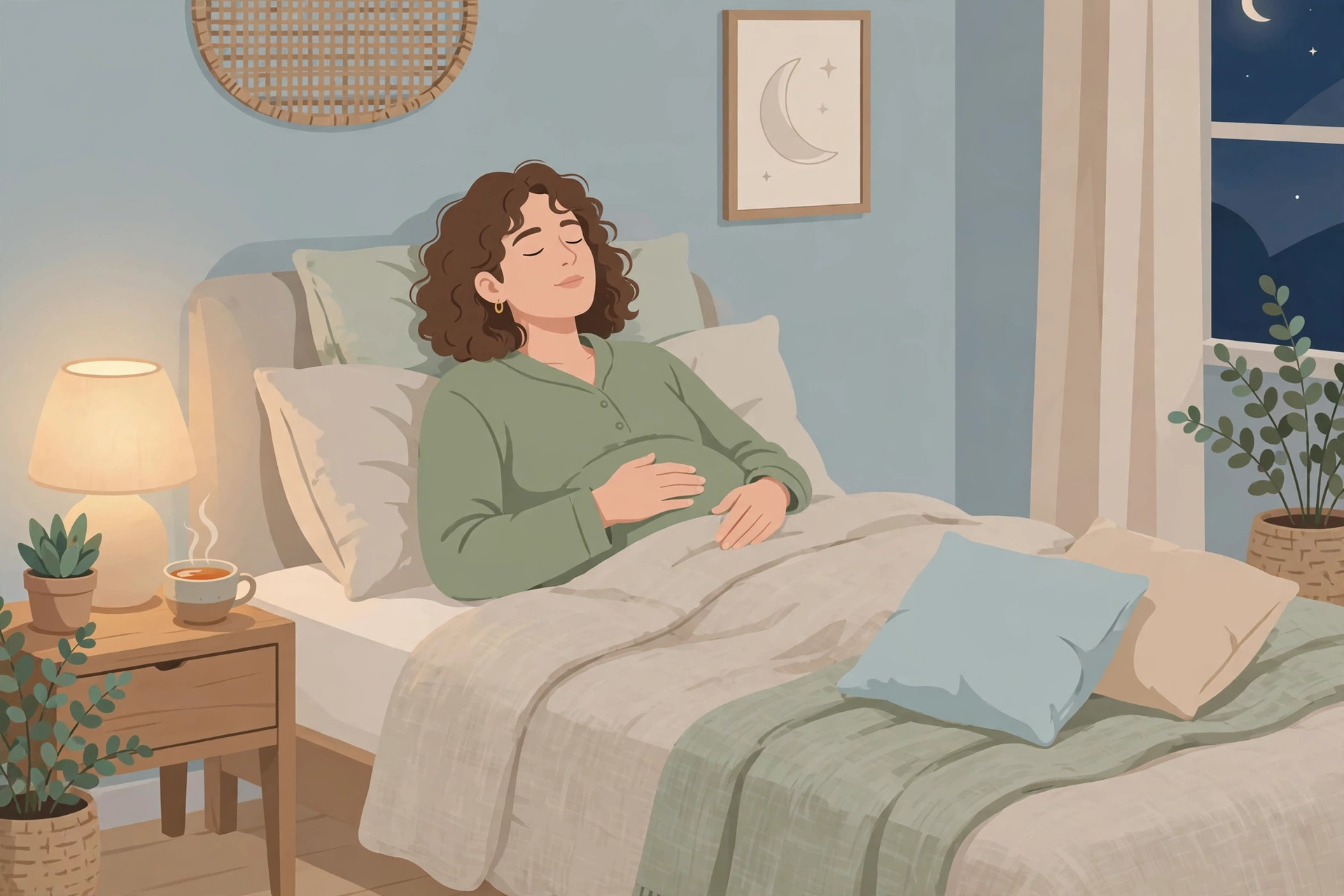
Slow, deep breathing. Lie comfortably and breathe in slowly through your nose, letting your belly rise. Then breathe out slowly through your mouth or nose, letting your belly fall. Aim for a slow, steady rhythm. You do not need to count or force it. Just breathe slowly and notice the rise and fall of your belly. If your mind wanders, gently bring your attention back to your breath.
4-7-8 breathing. This is a simple pattern you can try: breathe in through your nose for a count of 4, hold your breath for a count of 7, then breathe out slowly through your mouth for a count of 8. Repeat for a few cycles. The long exhale can feel calming. If holding your breath for 7 feels uncomfortable, you can shorten the counts — for example, breathe in for 3, hold for 3, and breathe out for 6. The exact numbers matter less than the slow, steady rhythm. If you feel dizzy or uncomfortable at any point, stop and breathe normally.
Body scan. Starting from the top of your head, slowly move your attention down through your body — forehead, jaw, shoulders, arms, hands, chest, belly, legs, and feet. Notice any tension and let it soften as you breathe. You do not need to change anything. Just notice. Many people find that a body scan helps them relax without focusing on sleep itself.
Progressive muscle relaxation. Gently tense one muscle group for a few seconds, then release. For example, scrunch your shoulders up toward your ears, hold for five seconds, then let them drop. Move through your body: hands, arms, shoulders, face, legs, and feet. The contrast between tension and release can help you notice where you are holding tension and let it go.
Visualization. Imagine a calm, peaceful place — a quiet beach, a forest path, a cozy cabin. Picture the details: the sounds, the temperature, the light. You do not need to create a perfect image. Just let your mind rest on something calm and pleasant. If worries return, gently guide your attention back to the image.
A few tips for these techniques:
- Do not judge yourself if your mind wanders. That is normal. Just bring your attention back gently.
- Do not watch the clock while doing them. Clock-watching increases pressure.
- Pick one technique and try it for a few nights before switching. Give it time to work.
- If a technique makes you feel anxious or uncomfortable, stop and try a different one, or simply breathe normally.
These techniques are general relaxation tools, not medical treatments. They work best as part of an overall wind-down routine, not as a quick fix you try once.
What to Avoid in the Evening
Sometimes falling asleep faster is less about what you do and more about what you stop doing. Here are common evening habits that can delay sleep:
Screens and bright light. Phones, tablets, computers, and TVs emit bright light and stimulating content. Scrolling through news, social media, or messages right before bed can keep your mind active. Try to put screens away 30 to 60 minutes before bed. If you use your phone as an alarm, consider putting it across the room or using a traditional alarm clock.
Caffeine late in the day. Caffeine can stay in your system for many hours. Even if you do not feel wired, an afternoon coffee or energy drink can make it harder to fall asleep. If you are sensitive to caffeine, try to avoid coffee, tea, energy drinks, and chocolate in the afternoon and evening. Pay attention to your own pattern — some people are more sensitive than others.
Alcohol as a sleep aid. Alcohol may make you feel sleepy at first, but it can disrupt sleep later in the night and leave you feeling less rested. Avoid using alcohol to fall asleep. If you drink, keep it moderate and earlier in the evening.
Heavy, spicy, or large meals close to bedtime. A big meal right before bed can cause discomfort, reflux, or restlessness. Try to eat your last large meal at least two to three hours before bed. If you are hungry later, a light snack is usually better than a heavy meal.
Intense exercise right before bed. Regular exercise is good for sleep, but a very intense workout right before bed can leave you wired. If you exercise in the evening, try to finish at least a few hours before bed, or choose gentler movement like stretching or a walk.
Clock-watching. Checking the time repeatedly can increase anxiety about sleep. If you keep calculating how many hours you have left, you put pressure on yourself to fall asleep quickly, which makes sleep harder. Turn your clock away, cover it, or put your phone face down. If you wake up during the night, avoid checking the time.
Long or late naps. A short nap (20 to 30 minutes) earlier in the day can be refreshing. A long nap or a nap late in the afternoon can reduce your sleepiness at night. If you nap, keep it short and earlier in the day.
You do not need to eliminate all of these at once. Start with the one that feels most relevant to you — for example, putting your phone away earlier or avoiding afternoon caffeine — and see how it affects your sleep.
What to Do If You Can’t Sleep After 20–30 Minutes
If you have been lying in bed for 20 to 30 minutes and you are still wide awake, frustrated, or tossing and turning, it can help to get up rather than lying there getting more anxious. This is sometimes called the “20-minute rule.” It is not a strict rule, but a guideline: if you are not falling asleep and you feel frustrated, do not stay in bed struggling.
Here is what to do:
- Get up quietly. Go to another dim, quiet room. Avoid bright lights and screens.
- Do something calm and boring. Read a paper book, listen to soft music, do some gentle stretching, or sit quietly. Avoid anything stimulating, like news, work, or intense shows.
- Return to bed when you feel sleepy. Go back to bed only when you feel drowsy, not just because a certain amount of time has passed. If you are still awake after another 20 to 30 minutes, you can repeat the process.
- Do not worry about the time. Avoid checking the clock or calculating how much sleep you will get. Focus on feeling calm and drowsy, not on forcing sleep.
This approach helps in two ways. First, it breaks the cycle of frustration that can build when you lie in bed awake. Second, it strengthens the association between your bed and sleep. If you only go to bed when you are sleepy, your brain learns that bed means sleep, not tossing and turning.
A few things to avoid during this time:
- Do not turn on bright lights or start working.
- Do not check your phone or scroll through social media.
- Do not eat a large meal or drink caffeine.
- Do not start a stimulating conversation or task.
If you wake up in the middle of the night and cannot fall back asleep, the same approach can help. Get up, do something calm in dim light, and return to bed when you feel sleepy.
It is normal to have an occasional bad night. One restless night does not mean your sleep is broken. Try not to worry about a single night. Focus on consistent habits over time, and give your body a chance to settle into a better rhythm.
When to See a Doctor
Most occasional trouble falling asleep improves with better habits and a calmer routine. But sometimes sleep problems are a sign of something that needs medical attention. You should talk to a doctor if:
- You have trouble falling asleep or staying asleep most nights for several weeks.
- You snore loudly, gasp for air, or pause breathing during sleep (these can be signs of sleep apnea).
- You feel excessively sleepy during the day, even after a full night in bed.
- You have persistent restless legs, pain, or discomfort that keeps you awake.
- You have anxiety, depression, or other mental health concerns that affect your sleep.
- You take medication that may affect sleep, or you are considering a sleep aid.
- You have tried improving your sleep habits for several weeks and nothing has helped.
A doctor can help you figure out whether there is a medical cause, whether a sleep study is needed, or whether other support would help. Be honest about your symptoms, how long they have lasted, and any medications or substances you use. That information helps your doctor give you the right guidance.
Do not try to diagnose yourself or start medication based on an article. Over-the-counter sleep aids, herbal supplements, and prescription sleep medications all have risks and side effects, and they are not right for everyone. Talk to a doctor or pharmacist before using them, especially if you have other health conditions or take other medications.
If you are experiencing thoughts of harming yourself, please reach out for help right away — to a trusted person, a crisis helpline in your country, or emergency services. You do not have to face that alone.
For more sleep ideas, see 101 tips for better sleep. And if you find yourself awake and bored late at night, our list of things to do when bored at home alone has quiet, low-cost ideas — just keep them calm and screen-light if you are trying to wind down.
Frequently Asked Questions
How can I fall asleep fast when my mind is racing?
Try getting worries out of your head before bed by writing them down. Then use a calming technique like slow breathing or a body scan. Avoid screens, avoid clock-watching, and focus on your breath rather than on trying to force sleep. If you are still awake after 20 to 30 minutes and feel frustrated, get up, do something calm in dim light, and return to bed when you feel drowsy.
Does the 4-7-8 breathing technique really work?
4-7-8 breathing is a relaxation technique that some people find calming. It involves breathing in for 4 counts, holding for 7, and breathing out for 8. It is not a guaranteed sleep cure, and it does not work the same for everyone. If it feels comfortable, try it for a few nights as part of your wind-down routine. If holding your breath feels uncomfortable, shorten the counts or try slow, deep breathing instead.
Should I avoid screens before bed?
Reducing screen use 30 to 60 minutes before bed helps many people. Screens provide bright light and stimulating content that can keep your mind alert. If you need to use a device, keep brightness low, avoid news and arguments, and stop scrolling well before bed. A paper book, soft music, or a warm shower are calmer alternatives.
What if I wake up in the middle of the night and can’t fall back asleep?
Use the same approach as for falling asleep initially. Avoid checking the time, avoid bright lights and screens, and do something calm in dim light until you feel sleepy. Then return to bed. Try not to worry about how much sleep you will get. One restless night is normal and does not mean your sleep is broken.
When should I see a doctor about trouble falling asleep?
Talk to a doctor if you have trouble falling asleep most nights for several weeks, if you snore loudly or gasp for air, if you feel excessively sleepy during the day, or if sleep problems are affecting your daily life. Also see a doctor if you have pain, restless legs, anxiety, depression, or take medication that may affect sleep. A doctor can check for medical causes and advise on next steps.
About This Article: This is general information, not medical advice. If sleep problems persist, talk to a doctor or qualified health professional.
Conclusion
Falling asleep fast is not about trying harder. It is about creating the right conditions: a calming wind-down routine, a dark, cool, quiet bedroom, a slower pace in the evening, and a gentle approach when sleep does not come right away. Breathing and relaxation techniques can help, but they work best as part of consistent habits, not as a one-time trick.
Start with one or two changes that feel manageable — putting your phone away earlier, dimming the lights, or adding five minutes of slow breathing before bed. Give those changes time. Sleep improves gradually, not overnight. And if sleep problems persist or you have symptoms that concern you, talk to a doctor. You deserve restful sleep, and there is help available if you need it.
Tonight, try this: dim the lights, put your phone away, do a few minutes of slow breathing, and let sleep come to you. Your body knows how to sleep. Your job is to give it a calm, comfortable place to do so.

101Thing publishes practical guides and lists that help readers try new ideas, start conversations, and make everyday life a little better. Articles are researched, written, and reviewed for accuracy and usefulness before publication. Questions or corrections can be sent via the Contact page.