

Sources & Further Reading
These sources offer more background on the topic above.
- Edutopia — Student Creativity Reverses Boredom — Shows how creative, student-driven activities can turn boredom into engagement.
- Edutopia — Increasing Student Interest in Learning — Offers classroom strategies for making lessons more interesting and participatory.
Intro
Every student gets bored at school sometimes. A slow lesson, a long lunch break, a rainy day stuck indoors, a study hall with nothing to study — it happens to everyone. The trick is not to wait for the bell. It is to have a few good, school-appropriate ways to use the time that are fun, useful, or both.
This list gives you 101 things to do when bored in class or at school, split into quiet in-class ideas, break and lunch ideas, after-school activities, things to do with friends, and creative projects. Everything here is meant to be respectful: no cheating, no disrupting class, no breaking school rules. If an idea does not fit your school’s rules, skip it and pick another.
Use the list when you have free time, not as a way to tune out of learning. The best boredom-busters are the ones that leave you a little happier, a little more organized, or a little more connected to the people around you. For more ideas for other settings, see our 101 things to do when bored at home alone with no money and 101 things to do when bored with friends. Or check out our list of 101 things to do on a computer when bored if you are in a computer lab or using a laptop during free period.
How This Article Was Put Together
This list was put together by researching the activities students commonly use to pass free moments at school — in class, at break, after school, and with friends. We grouped the ideas by setting so you can pick something that fits the moment, and we checked each one for school-appropriateness, removing anything disruptive, unsafe, or against school rules. Written by the 101Thing team and reviewed for clarity and safety.
What to Do When Bored in Class: Quiet & Productive Ideas (1–20)
- Play a silent game of dots and boxes on a scrap of paper. Draw a small grid of dots, take turns joining two dots with a line, and claim any box you complete with your initial. It needs no talking, fits in a notebook corner, and a full grid can quietly fill a study hall or break.
- Invent a secret code and write a short message in it. Swap letters for symbols, numbers, or shifted letters, then test it by decoding your own sentence back. Keep the key in the margin so you can crack it again later.
- Write a six-word story about your day. Six words is short enough to force a real choice — pick the funniest, strangest, or most honest six words you can. Try a second one with a completely different mood.
- Draw a map of an imaginary place. Sketch a coastline, add three towns with funny names, a river, and one place you would warn travelers about. A map needs no words to be interesting, and you can add to it during a break or study hall.
- Play the alphabet categories game in your head. Pick a category — animals, foods, movies — and name one for each letter from A to Z without writing anything down. If you get stuck on a letter, skip it and come back; Q, X, and Z are allowed to be hard.
- Design a book cover for a story you will never write. Pick a title, draw one image that hints at the plot, and add a one-line tagline. A good cover makes people curious without giving anything away.
- Write a haiku about something in the room. A haiku is five syllables, then seven, then five — count them on your fingers if it helps. The desk, the window, the clock: ordinary subjects make the best tiny poems.
- Plan your perfect day, hour by hour, on one page. Start with waking up and end with bedtime, and include one thing you would actually do differently from a normal day. It is a plan you can really use later, not just daydreaming.
- Fold a paper fortune teller. Fold a square of paper into the classic fortune teller shape, write eight short fortunes inside, and number the outside flaps. It is silent, hands-on, and easy to tuck away when class resumes.
- Rank your five favorite foods in order, then defend number one. Write one sentence for each pick explaining why it earned its place — and one sentence about what would knock it off the list.
- Write a to-do list for after school. List no more than three must-do tasks for after school, then add one nice-to-have. Checking off a small list feels better than staring at a long one.
- Practice neat handwriting by copying a favorite quote. Pick a quote that motivates you and copy it slowly, focusing on even spacing and clear letters. You can keep it on the first page of your notebook as a reminder.
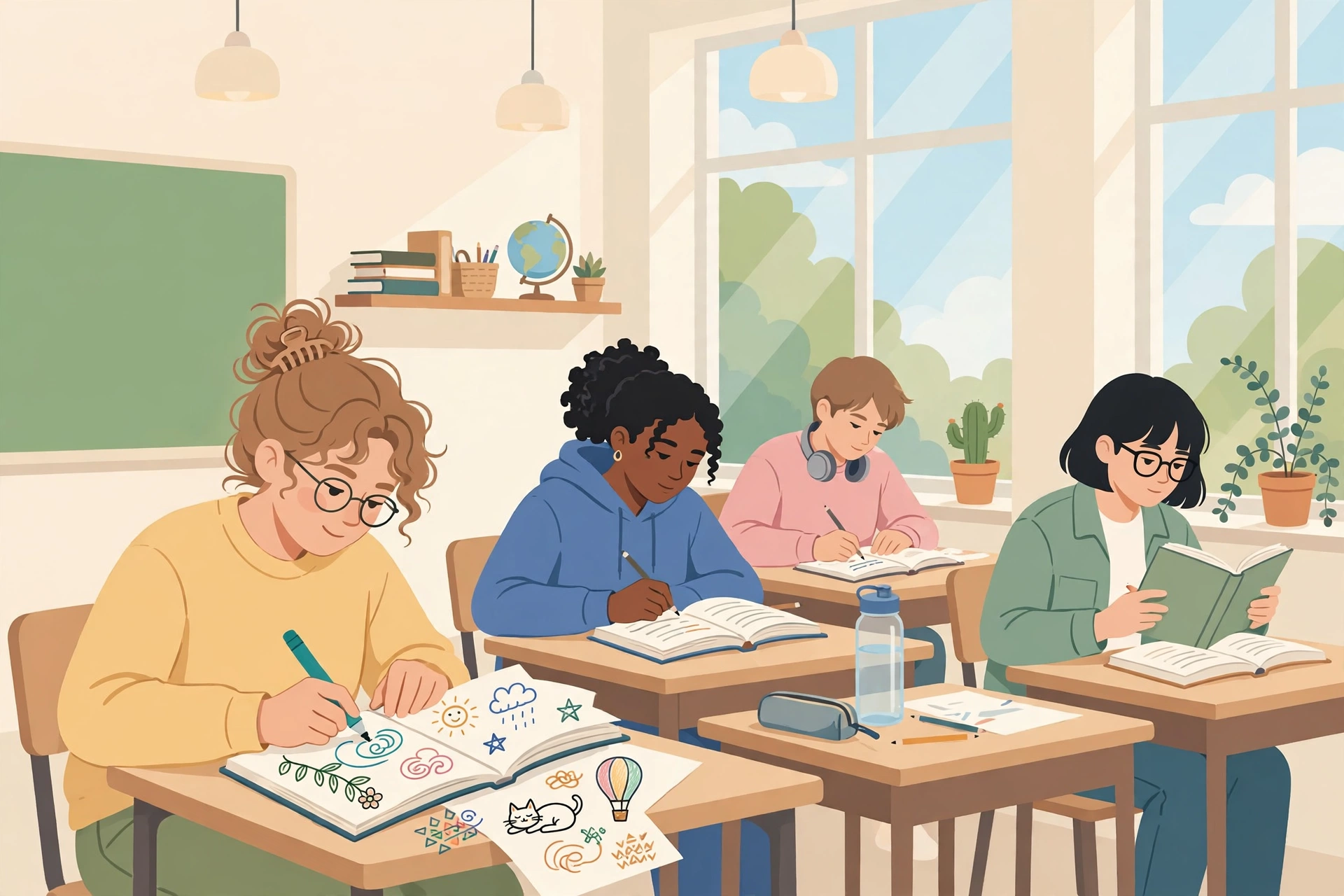
- Draw a small doodle in the margin of your notebook. Keep it small and in the margin so it does not cover your notes, and use it to illustrate an idea from class. A quick sketch of a concept can make it easier to recall later.
- Make a list of things you are grateful for today. Name three specific things, like a friend who helped you or a lesson you enjoyed, instead of general ones. It only takes a minute and can lift your mood.
- Try a word ladder. Write a short word, then change one letter at a time to reach a different word — for example, turn COLD into WARM in four steps (COLD → CORD → CARD → WARD → WARM). Short ladders are quick; longer ones are a proper puzzle.
- Invent a school subject you would actually want to take. Give it a name, three lessons it would teach, and one field trip. If it sounds fun to invent, it would be fun to take.
- Write a short journal entry about your day so far. Write four or five sentences about the best and hardest parts of your day so far. You do not need perfect sentences — just get your thoughts down.
- Invent ten questions you would ask a famous person. Pick someone you admire, then write questions no interviewer would think to ask. The stranger the question, the better the answer would be.
- Do a silent memory walk. Picture the route from your front door to your classroom, and place one item you need to remember at each landmark along the way. Walk the route in your head twice — it is a memory trick and a quiet game in one.
- Write a kind note to give a friend later. Mention one specific kind thing they did, like sharing notes or making you laugh. Leave it in their locker or hand it to them between classes.
If your free period is in a computer room, see also our things to do on a school computer.
Break and Lunch Ideas (21–40)
- Eat lunch with someone you do not usually sit with. Introduce yourself, ask what they are reading or working on, and listen more than you talk. One friendly lunch can be the start of a new friendship.
- Take a walk around the school grounds and get some fresh air. Stick to paths and areas where students are allowed, and take slow, deep breaths as you walk. A short walk can help you reset before your next class.
- Play a quick card game with friends. Pick a quick game everyone knows, agree on the rules first, and keep rounds short so everyone gets a turn. Pack the cards away before the bell so you are ready for class.
- Start a lunchtime book club with two or three classmates. Start by agreeing on a short book or a few chapters to read each week. Meet at the same table each time and let everyone share one thing they liked.
- Visit the library and browse a shelf you have never explored. Pick a shelf you have never tried, pull out two or three books, and read the first page of each. Ask the librarian for a recommendation if you are not sure where to start.
- Help a teacher tidy up a classroom or carry supplies. Ask first, then offer a specific job like stacking books or carrying a box. Teachers often appreciate help most on busy days, and it is a kind way to spend a break.
- Practice a sport skill, like juggling, dribbling, or balancing. Find an open space away from walkways, and practice one skill for five minutes at a time. Keep the pace easy and stop if the area gets crowded.
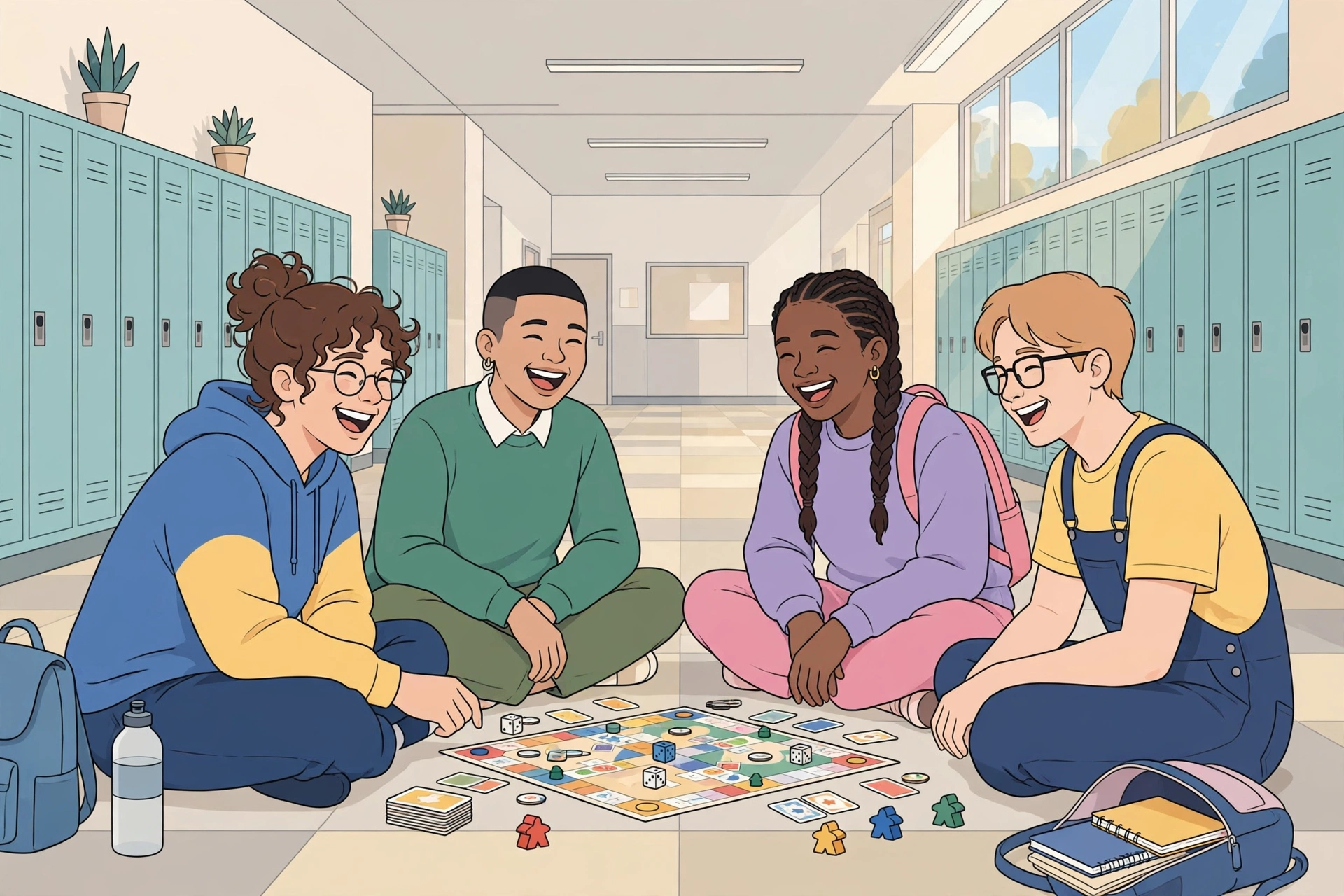
- Play a board game or puzzle with friends in a common area. Choose a game that fits in the time you have, and set it up in a common area where you will not block others. Agree to pause or pack up when break ends.
- Start a lunchtime walking group. Invite one or two friends, pick a short loop around campus, and walk at a pace everyone can manage. Walking together gives you time to talk without needing any equipment.
- Write a letter to a friend, family member, or future self. Start with one piece of news from your week, then ask them a question so they can reply. A handwritten letter feels special because it takes a little extra care.
- Learn a few words in a new language using a free app or phrasebook. Learn three useful phrases, like greetings and thank you, and practice saying them out loud. Try using one of them with a friend who knows the language.
- Take photos of interesting things around campus for a photo project. Check your school’s photo rules first, and focus on interesting details like shadows, signs, or plants. Pick your five best shots at the end and think about what makes them work.
- Organize a friendly trivia quiz for your lunch table. Write five questions about topics your table knows, like school life, music, or sports. Keep it friendly, take turns asking, and celebrate the winner with applause.
- Sketch the school building, courtyard, or a favorite spot. Start with the basic outline, then add windows, doors, and one detail you notice for the first time. You do not need fancy supplies — a pencil and notebook work well.
- Listen to a podcast episode or a few songs you love. Use headphones, keep the volume low, and pick an episode you can finish in one break. If it is a podcast, jot down one idea you want to remember.
- Start a small kindness project, like leaving encouraging notes for classmates. Write two or three short, positive notes and leave them where classmates will find them, like on a desk or locker. Keep the messages kind, general, and respectful.
- Plan a weekend outing with friends. Agree on one activity, check what it costs, and pick a time that works for everyone. Write down who is bringing what so nothing is forgotten.
- Play a game of catch, tag, or another active game with friends. Play in an open area where games are allowed, agree on simple rules, and include anyone who wants to join. Stop as soon as break ends so you are on time for class.
- Read a chapter of a book just for fun. Pick a book you actually enjoy, and read just one chapter without pressure to finish the whole book. Keep a bookmark handy so you can pick up where you left off.
- Help a classmate with homework they are stuck on. Let them try the problem first, then talk through the steps together instead of giving the answer. Explaining it in your own words often helps you understand it better too.
After-School Ideas (41–60)
- Join a school club you have been curious about. Check the club list or notice board, and attend one meeting as a trial before committing. Bring a friend if you feel nervous about going alone.
- Try out for a school team, play, or performance group. Read the tryout details, practice the basics beforehand, and show up on time. Even if you do not make it, you will have learned something about the process.
- Volunteer for a school event or fundraiser. Sign up for a small job, like setting up chairs or greeting guests, and arrive a few minutes early. Volunteering is a good way to meet people and help your school.
- Start a study group for a subject you find challenging. Invite two or three classmates, pick one topic per session, and agree to each bring one question. End by quizzing each other on what you covered.
- Visit the school library to research a topic that interests you. Start with one question you are curious about, then look for a book or trusted source that answers it. Write down the source so you can find it again later.
- Practice an instrument or learn a new song. Practice one song or scale slowly, then repeat the tricky part a few times. Short, regular practice works better than one long session once in a while.
- Work on a personal project, like a blog, comic, or video. Choose one small next step, like drafting an outline or sketching a first page. Working for 15 minutes is enough to get started without feeling overwhelmed.
- Go for a run, bike ride, or workout after school. Warm up first, choose a safe route, and tell someone where you are going. Start at an easy pace and drink water when you finish.
- Help organize a school dance, talent show, or spirit week. Ask the organizer what jobs are open, and offer a specific skill like making posters or setting up music. Write down your task so you remember what you promised.
- Learn a new skill online, like coding, drawing, or a language. Pick one free beginner tutorial and follow it step by step instead of jumping ahead. Practice for 15 minutes, then note what you want to try next time.
- Start a small business idea, like selling crafts or tutoring. Start by listing what you can make or do well, and who might need it. Talk to a trusted adult about costs and school rules before selling anything.
- Interview a teacher about their career path. Ask for a few minutes at a good time, and prepare three questions about how they chose their job. Thank them afterwards and write down what surprised you.
- Organize a cleanup of a school area with friends. Get permission first, bring gloves if needed, and work in a small team. Even tidying one corner makes a visible difference.
- Plan a school newspaper article, podcast episode, or video. Start with one clear idea and a short outline of the main points. Decide who your audience is and what you want them to learn.
- Practice for an upcoming test with a friend. Take turns asking each other questions, and explain any answers you get wrong. Keep the session short and focused on one chapter at a time.
- Explore a new hobby, like chess, photography, or gardening. Try one hobby for a week, like borrowing a chess set or taking photos around school. If you enjoy it, look for a club or beginner guide to keep going.
- Write a story, poem, or song. Begin with one image or feeling, then write for ten minutes without worrying about perfection. You can revise later — the first draft just needs to exist.
- Build something, like a model, a birdhouse, or a simple gadget. Choose a simple project with materials you already have, and follow instructions carefully. Ask an adult for help with any tools you have not used before.
- Watch an educational documentary or tutorial. Pick one topic you are curious about, watch it in full, and write down two things you learned. Share one interesting fact with a friend later.
- Set a personal goal for the semester and write a plan to reach it. Make the goal specific, like improving one grade or reading five books, and break it into weekly steps. Check your progress at the end of each week.
For indoor days, see also our things to do on a rainy day.
Things to Do With Friends (61–80)
- Play a round of twenty questions. Pick a person, place, or thing, and let players ask only yes-or-no questions. Keep track of the count so everyone knows how many guesses are left.
- Start a two-player drawing game, like Pictionary. Use a notebook and agree on categories like animals or movies before you start. Set a short time limit for each drawing so turns stay quick.
- Have a friendly debate about a fun topic, like the best movie snack. Pick a light topic, take turns making one point at a time, and listen without interrupting. Agree that the goal is fun, not winning.
- Play a quick game of rock, paper, scissors, tournament style. Write down a simple bracket so everyone knows who plays next. Keep rounds quick and cheer for the finalists.
- Teach a friend a card trick or a magic trick. Choose one simple trick you can do confidently, and show it slowly step by step. Let your friend practice it back to you.
- Start a shared playlist of songs everyone likes. Ask each friend to add two songs, and pick a theme like upbeat or study music. Listen together at lunch and vote on favorites.
- Take a group photo in a funny pose. Check that everyone is happy to be in the photo, and pick a pose everyone can do. Take two or three shots so you have a good one to keep.
- Play a word game, like categories or word association. Pick a category like animals or foods, and go around in a circle naming one each time. If someone gets stuck, give them a hint instead of skipping them.
- Swap book or movie recommendations. Share one book or movie you loved and one sentence about why. Write down the recommendations you get so you can try them later.
- Plan a dream trip together, with a budget and itinerary. Pick a destination, look up three things to see there, and sketch a simple day-by-day plan. Set a rough budget by listing travel, food, and stay costs.
- Make friendship bracelets or simple crafts. Start with two or three colors of thread and a simple knot pattern. Make one bracelet at a time and give the first one to a friend.
- Start a group chat just for sharing good news. Agree that the chat is only for positive updates, like good grades or kind moments. Keep messages short and celebrate each other’s news.
- Play a board game or card game during free time. Choose a game everyone knows or can learn in five minutes. Set a time limit so the game ends before class starts again.
- Practice a dance routine or a group performance. Pick a short song, learn one section at a time, and practice slowly before adding speed. Film a practice run so you can see what to improve.
- Have a “show and tell” round where everyone shares something cool. Ask each person to share one thing and explain why it matters to them. Keep each turn to a minute so everyone gets a chance.
- Play a guessing game, like charades or heads up. Take turns acting without talking, and use simple clues like pointing to size or shape. Keep rounds short so everyone gets a turn to act.
- Write a collaborative story, one sentence at a time. Start with one opening sentence, then let each person add one sentence at a time. Read the whole story aloud at the end for a laugh.
- Start a friendly competition, like who can draw the best cartoon. Agree on a theme, like school pets or superheroes, and give everyone five minutes to draw. Vote on the funniest or most creative, not just the neatest.
- Share three things you are each looking forward to. Take turns naming three things, big or small, like a weekend plan or a favorite lesson. Listening to each other can make everyone feel more hopeful.
- Plan a study session that ends with a fun reward. Plan 25 minutes of focused study, then a short fun break together. Agree on the reward beforehand, like a game or a snack.
If you need an opener for a new classmate, see also our icebreaker questions for students.
Creative Things to Do in Class When Bored (81–101)
- Start a sketchbook and draw one thing every day. Keep a small sketchbook in your bag and draw one quick thing you saw that day. It does not need to be perfect — the habit matters more than the result.
- Write a poem about your school, your town, or your day. Start with one memory, like a funny moment or a quiet morning, and write four to six lines about it. Read it aloud to hear how it sounds.
- Design a poster for a school event. Include the event name, date, time, and place in large, clear letters first. Add one bold image or color so people notice it from a distance.
- Make a vision board for your goals this year. Cut or draw pictures that show your goals, like a book for reading or a trophy for a sport. Put the board where you will see it each morning.
- Start a journal and write about one thing you learned today. Write one sentence about what you learned, then one sentence about why it matters. Doing this daily builds a useful record of your progress.
- Draw a comic strip about a funny school moment. Plan three or four panels: setup, problem, and punchline. Keep the drawings simple and let the words carry the joke.
- Design a new school logo or mascot. Start by listing three words that describe your school, then sketch a simple shape for each. Ask a friend which sketch is clearest at a glance.
- Write a short story with a classmate as the hero. Ask your classmate if they are happy to be the hero, and give them a fun challenge to solve. Keep the story kind and let them save the day.
- Make a list of 101 things you want to do before graduation. Start with ten easy ideas, like places to visit or skills to try, and add a few each week. Keep the list in a notebook you can update.
- Create a study playlist that helps you focus. Choose calm songs without distracting lyrics, and keep the playlist to about 30 minutes. Test it once while studying and remove any song that pulls your attention away.
- Write a thank-you note to a teacher who helped you. Mention one specific thing they did, like explaining a tricky topic patiently. Deliver it at the end of class or leave it on their desk.
- Start a photo diary of your school year. Take one photo a week that captures something memorable, with permission where needed. Add a one-line caption so you remember the story behind it.
- Design a dream bedroom, treehouse, or clubhouse. Sketch the layout first, then add furniture, colors, and one fun feature. Label each part so someone else can understand your design.
- Make a handmade card for someone’s birthday. Fold a card, write a short personal message inside, and decorate the front with a simple drawing. A handmade card shows you took time to make it.
- Write a list of ideas for a school improvement project. Walk around school and notice one thing that could be better, like seating or signs. Write your idea plus one practical step to make it happen.
- Learn to fold origami animals. Start with a simple animal like a dog or cat, and follow the folds one step at a time. Practice with scrap paper before using your best paper.
- Create a crossword puzzle about your favorite subject. Pick eight to ten words from the subject, write a clue for each, and lay them out on graph paper. Swap puzzles with a friend to test them.
- Start a collection, like quotes, stickers, or fun facts. Pick one type of collection, like inspiring quotes or fun facts, and keep it in a small notebook. Add one new entry each day and note where you found it.
- Write a letter to your future self to open at graduation. Write about what you hope to have learned and who you hope to have become. Seal it and keep it somewhere safe until graduation day.
- Make a plan for a talent you want to develop this year. Choose one talent, set a small weekly practice time, and pick one way to show progress. Review your plan each month and adjust if needed.
- End the day by writing down one thing you are proud of today. Pick one specific moment, however small, like finishing a hard task or helping someone. Writing it down helps you end the day on a positive note.
Frequently Asked Questions
Is it okay to do these things during class?
Only the quiet, non-disruptive ideas — like organizing notes, reviewing material, or writing a summary — belong during class, and only when your teacher allows it. Save games, crafts, and social activities for breaks, lunch, or after school.
What to do when you are bored in class and finish your work early?
Use the time to review, preview upcoming material, or organize your notes. Ask your teacher if there is anything helpful you can do. Finishing early is a great chance to get ahead, not a signal to check out.
How can I make lunch break less boring?
Try one new thing: sit with someone different, visit the library, start a club, or play a game with friends. Small changes to your routine can make the same break feel fresh.
What if my friends are bored too?
Share this list with them and pick one idea together. Group activities — games, crafts, planning a project — are usually more fun than solo ones, and they help everyone feel included.
How do I avoid getting in trouble for being bored?
Stick to school-appropriate ideas, follow your school’s rules, and respect your teachers and classmates. If you are unsure whether something is allowed, ask first. Boredom is normal; breaking rules to fix it is not worth it.
About This Article: These ideas are meant for genuine free moments — breaks, lunch, and after school — not for times when you should be paying attention in class.
What can I do when bored in class with just a pen and paper?
Dots and boxes, word ladders, haikus, fortune tellers, and six-word stories all work with only a pen and a scrap of paper, and none of them need talking or a phone. Use them only during breaks, study hall, or another gap your teacher has explicitly allowed — never while the teacher is teaching — and put them away as soon as class resumes.
What are quiet things to do in class that won’t disturb anyone?
Anything silent and still: a mental word game, a margin doodle, a journal entry, a plan for your day, or a list you have been meaning to make. If an idea needs talking, movement, sound, or a screen, save it for break or lunch instead.
Can I play games in class if I am bored?
Only quiet paper games, only during breaks, study hall, or explicitly permitted downtime, and only if your teacher and school rules allow it. Never play during teaching, and never play anything that distracts classmates. When in doubt, ask first — a quick question beats a detention.
Conclusion
Being bored at school is not a problem to be embarrassed about — it is a sign that you have time and energy to use. Pick one idea from this list during your next break, study hall, or explicitly permitted gap, and see what happens. You might learn something, make a friend, start a project, or simply enjoy the rest of your day a little more.

101Thing publishes practical guides and lists that help readers try new ideas, start conversations, and make everyday life a little better. Articles are researched, written, and reviewed for accuracy and usefulness before publication. Questions or corrections can be sent via the Contact page.
 Amna Qamar