


Nobody warns you about this part. At school, friends came with the building. As an adult, you’ve got a job, a phone, and a couch that’s suspiciously comfortable.
Here’s the good news: you don’t need a magnetic personality. You need a hobby that puts you in the same room as the same people, again and again.
So we’ve sorted 101 of them by type, from pickleball to puzzle meetups. Pick the one that makes you curious, not the one that sounds impressive. And if the whole idea of making friends as an adult makes your stomach drop, you’re in good company.
Sources & Further Reading
Want to go deeper? These reputable sources cover this topic in more detail.
- Psychology Today — Friends — Psychology Today’s overview of friendship, including how to build new friendships and why they matter.
- Psychology Today — 5 Skills for Making Friends as an Adult — Five practical skills for making friends as an adult, including showing enthusiasm and staying consistent.
- U.S. Surgeon General’s Advisory, Our Epidemic of Loneliness and Isolation (2023) — on social connection and health.
How This Article Was Put Together
We put this list together by researching hobbies people commonly use to meet others — classes, clubs, sports, volunteering, and creative pursuits — then grouping them by how social they are and how easy they are to start. Each hobby was checked for clarity, so you know what it involves, and for appropriateness, so the list stays welcoming to newcomers. Duplicates were removed and overlapping ideas were merged. Written by the 101Thing team and reviewed for clarity and safety.
What Makes a Hobby Good for Meeting People?
The best hobbies for meeting people repeat on a schedule, put you beside the same faces, and give you something to do besides talk. That mix takes the pressure off. Communication researcher Jeffrey Hall estimated it takes roughly 50 hours together to turn an acquaintance into a casual friend (Journal of Social and Personal Relationships).
Fifty hours. That’s not one mixer.
I’ll be blunt: a single networking night is a pleasant evening, not a friendship. What works is repetition. Look for three things before you sign up:
- A regular schedule. Weekly beats monthly; monthly beats “whenever.”
- A shared task. Silence feels fine when your hands are busy.
- A beginner-friendly door. If everyone’s been there for ten years, you’ll feel it.
With that in mind, let’s get to the list.
Sports and Fitness: Where Sweat Breaks the Ice
Team and group sports are the fastest route to new friends, since they bundle teamwork, a fixed schedule, and a post-game hangout. Pickleball, rec leagues, and running clubs welcome beginners. Cycling and hiking groups work too, thanks to long stretches of easy conversation.
Find it: local leagues, gym classes, park runs. Cost: free–mid. How often: weekly games or classes.
- Pickleball — small court, constant chatter, and doubles partners who rotate.
- Recreational soccer league — teams come with built-in friends and a bar tab afterward.
- Running club — easy-pace group runs mean you can actually talk.
- Bouldering / rock climbing — climbers love swapping tips on a tricky route.
- Volleyball — rotating positions, lots of high-fives.
- Ultimate frisbee — famously friendly, with a “spirit of the game” culture.
- Kickball — silly, low stakes, nobody takes it seriously.
- Softball — slow innings leave plenty of room for chat.
- Pickup basketball — show up, get picked, repeat. Regulars notice new faces fast.
- Tennis — join a doubles ladder or club mixer instead of hitting against a wall.
- Cycling club — the coffee stop is half the point.
- Hiking group — walking side by side makes talking easier than sitting face to face.
- Rowing / dragon boat racing — you literally move in sync with your teammates.
- Yoga classes — quiet during practice, but many studios host socials.
- CrossFit or group fitness — shared suffering bonds people quickly.
- Martial arts — training partners learn to trust each other fast.
- Masters swimming — same lane, same early mornings, same post-swim coffee crowd.
- Curling or hockey league — curling even builds in drinks with the other team.
- Golf — four hours with the same foursome is a lot of conversation.
- Bowling league — weekly nights, friendly rivalry, snacks.
Dance and Movement: Awkward for About Ten Minutes
Yes, dance classes help you meet people. Partner rotation pushes you to talk to everyone in the room, and the nerves fade quickly because everybody’s a little clumsy at first. Most beginner classes expect zero experience and, often, no partner.
Find it: community studios, social dance nights. Cost: low–mid. How often: weekly class + monthly social.
- Salsa — rotating partners mean you’ll meet the whole room in one night.
- Swing dancing — welcoming scenes, live bands, lots of smiling.
- Ballroom dancing — a structured course keeps the same group together for weeks.
- Contra / folk dancing — you change partners every dance, and a caller tells you what to do.
- Zumba — loud, joyful, no partner required.
- Line dancing — no partner, no pressure, plenty of laughing at your own mistakes.
- Tango — intense, so the community tends to be tight-knit.
Creative and Arts: Make Something, Meet Someone
Creative classes work because everyone’s focused on the same project, so conversation happens sideways, over a wheel, a canvas, or knitting needles. Groups that perform or share work, like choirs and improv troupes, tend to bond fastest.
Find it: community art centers, maker spaces, library workshops. Cost: low–mid. How often: weekly or fortnightly sessions.
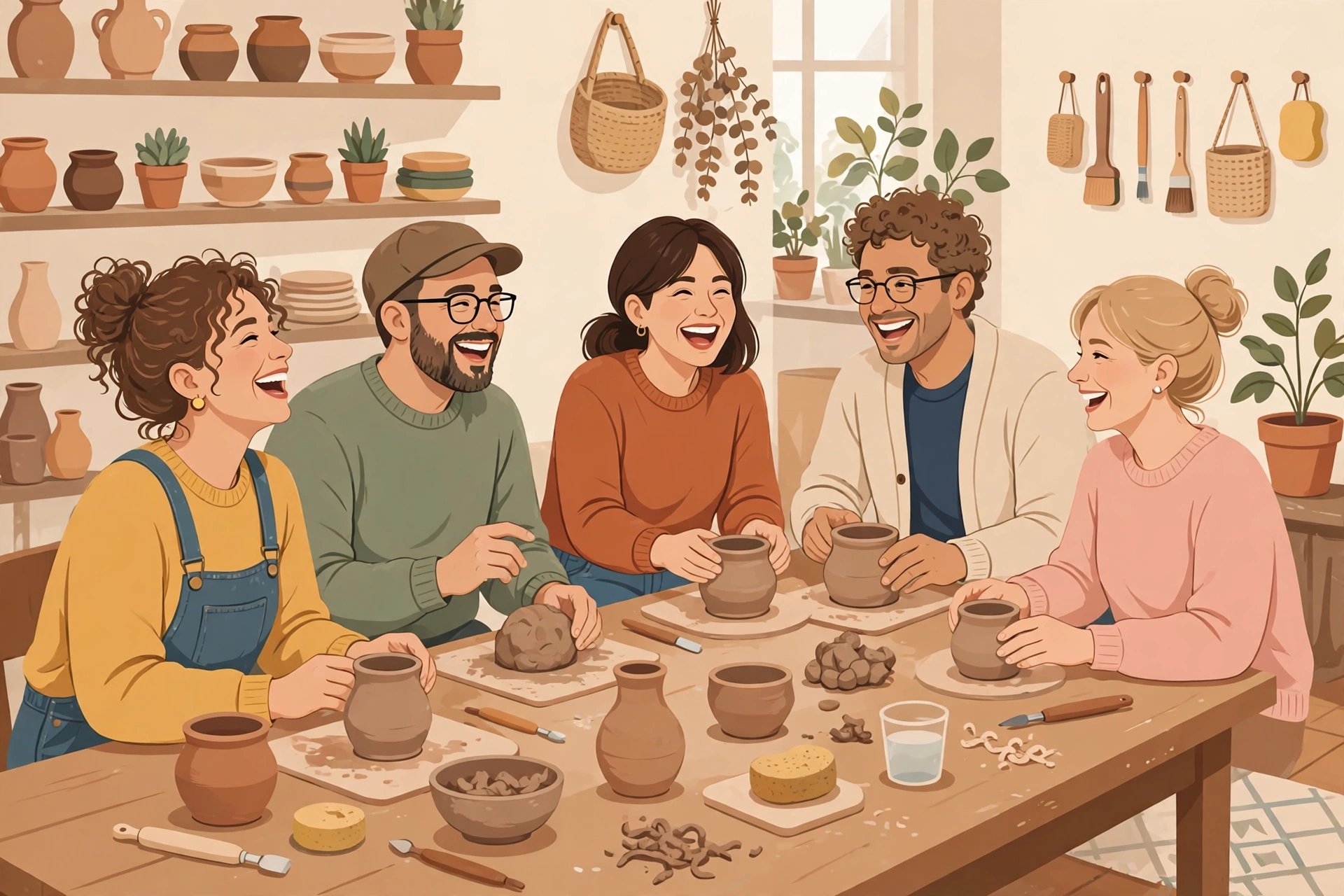
- Pottery class — shared studio tables and plenty of “does this look right?”
- Improv comedy — basically a masterclass in talking to strangers.
- Community theater — months of rehearsals with the same cast and crew.
- Choir — you breathe and sing in unison. It’s hard to stay shy.
- Painting classes — chat while you work, compare results at the end.
- Photography club — photo walks and critique nights give you an instant topic.
- Life drawing sessions — quiet in the studio, social over tea afterward.
- Knitting / crochet circle — busy hands, easy conversation.
- Writing group — sharing drafts builds trust quicker than small talk.
- Open mic poetry — regulars cheer each other on, newcomers included.
- Stand-up comedy — scary, yes, but comics are a supportive bunch.
- Band or jam sessions — music is a conversation without needing words.
- Ukulele group — easy to learn, and beginners are the norm.
- Woodworking classes — shared benches mean you’ll end up asking for help.
Games and Social: Friendly Competition, Low Pressure
Games give strangers a script. Rules, turns, and a shared goal mean you’re never stuck wondering what to say. Weekly formats, such as trivia teams, leagues, and tabletop campaigns, create the repeat contact that actually builds friendships.
Find it: board-game cafes, trivia nights, meetup groups. Cost: free–low. How often: weekly trivia or monthly game night.
- Board game nights — the game is the icebreaker.
- Trivia nights — join a team and you’ve got instant allies.
- Dungeons & Dragons / tabletop RPGs — the same group for months of storytelling.
- Chess club — one-on-one games, plus post-game analysis chats.
- Poker night — a regular table, regular banter.
- Bridge — a partnership game with a loyal, welcoming community.
- Mahjong — four players, endless conversation between hands.
- Magic: The Gathering / card game meetups — local game stores run weekly events.
- Escape rooms — great teamwork, but it’s a one-off unless you form a regular crew.
- Karaoke — nothing breaks the ice like a duet gone wrong.
- Video game clubs / LAN parties — co-op play turns screens into friendships.
- Darts league — low effort, high banter, pub atmosphere.
- Cornhole or bocce — backyard energy with team rotation.
- Puzzle meetups — everyone leans over the same table and talks.
Outdoors and Nature: Fresh Air, Fewer Phones
Outdoor hobbies suit people who find sitting across from a stranger awkward. Walking, paddling, and stargazing put you side by side, facing the same direction, which makes conversation easier. Look for local clubs with regular schedules rather than solo outings.
Find it: hiking clubs, gardening groups, park cleanups. Cost: free–low. How often: weekly or monthly outings.
- Camping meetups — a campfire does half the work for you.
- Kayaking / paddleboarding — group paddles and the occasional splash.
- Birdwatching — patient, friendly crowds who love to share a sighting.
- Community gardening — weekly weeding, seasonal harvests, plenty of neighbors.
- Fishing — slow hours and easy talk. Fishing clubs run tournaments and swaps.
- Sailing — crews need each other, so you’ll learn names fast.
- Surfing — the lineup is a social scene if you show up regularly.
- Skiing / snowboarding — chairlift rides are built for conversation.
- Trail running — similar to a running club, with better views.
- Geocaching — treasure hunting with strangers, and local groups host meetups.
- Foraging walks — guided by someone who loves to explain things.
- Stargazing / astronomy club — members happily share their telescopes.
Food and Drink: Friends Are Made at the Table
Food-based hobbies work because eating together is one of the oldest ways humans bond. Classes, clubs, and tastings hand you something to talk about right away: the flavor, the recipe, the burnt edges. Supper clubs and potlucks are especially good for regular contact.
Find it: cooking classes, supper clubs, farmers markets. Cost: low–mid. How often: monthly class or market visit.
- Cooking classes — you chop together and eat together.
- Supper clubs — the same hosts and guests rotating through homes or restaurants.
- Baking club — bring a bake, swap tips, go home with leftovers.
- Wine tasting — opinions come easily after the second pour.
- Homebrewing / craft beer club — members love sharing batches, good and bad.
- Coffee tastings — a gentler cousin of wine tasting, with equally strong opinions.
- Food tours — walk, eat, chat, repeat.
- Potluck groups — everyone contributes, so everyone has something to talk about.
- Cocktail-making classes — shaking, stirring, and comparing results.
Learning and Intellectual: For People Who Like to Talk Ideas
Learning groups attract curious people, and curious people are usually good at conversation. Book clubs, language exchanges, and Toastmasters meet on a schedule and give you instant topics. They’re also a smart pick if you’d rather talk than sweat.
Find it: evening classes, book clubs, lecture series. Cost: free–low. How often: weekly or monthly meetings.
- Language exchange — you help them with English, they help you with Spanish. Everybody wins.
- Book club — the book is the topic, and tangents are the bonus.
- Toastmasters — structured practice with a very supportive crowd.
- Coding meetups — pair up on a problem and you’ve made a contact.
- Lecture or history series — questions afterward lead to conversations.
- Museum docent / membership events — you’ll meet fellow enthusiasts in no time.
- Philosophy discussion group — big questions, small tables.
- Debate club — disagree politely, then grab dinner.
- Genealogy society — members swap family-tree tricks and surprising stories.
Volunteering and Community: Meet People Who Care About the Same Things
Volunteering is one of the most reliable ways to meet people, because you share a purpose before you share a single word. Regular shifts at a shelter, food bank, or build site put you beside the same people week after week.
Find it: food banks, shelters, neighborhood groups. Cost: free. How often: weekly shift or monthly event.
- Animal shelter volunteering — dog walkers tend to find each other.
- Habitat for Humanity — build a house, build a friendship.
- Food bank volunteering — sorting and packing leave room for conversation.
- Community cleanups — low commitment, high satisfaction, plenty of chatter.
- Mentoring — you meet the mentee, but also other mentors.
- Campaign or political volunteering — shared passion, long hours, tight bonds.
- Faith or spiritual community groups — regular gatherings with built-in welcome.
- Neighborhood association — you’ll know your neighbors by the end of the year.
The Wildcards: Hobbies That Don’t Fit a Box
These don’t sort neatly, but they all share built-in community. Car clubs, RC meetups, and fan groups come with ready-made conversation starters, and members usually love welcoming newcomers who share the obsession.
Find it: search your city + the hobby name + ‘beginners welcome’. Cost: varies. How often: whatever the group runs — consistency matters more than frequency.
- Dog training classes / dog park regulars — dogs are the ultimate wingmen.
- Car or motorcycle club — ride-outs and garage nights.
- Cosplay / fan conventions — instant common ground with strangers in costume.
- Model building / RC clubs — patient hobbyists who love to teach.
- Fantasy sports league — trash talk is a love language.
- Sewing / quilting bee — a long tradition of talking while stitching.
- Entrepreneur or professional meetups — useful, though pick a recurring group.
- Sports fan clubs / watch parties — shared groans and cheers do the bonding.
Which Type of Hobby Fits Your Personality?
Pick a hobby type based on how you like to interact. Active people do well in sports; introverts often prefer creative or game groups, where the activity carries the conversation; and talkers thrive in learning groups. This table shows the trade-offs at a glance. For more ideas, see our guide to hobbies for introverts.
| Hobby Type | Talking Required | Best For | Typical Rhythm |
|---|---|---|---|
| Sports & fitness | Low to medium | Active people who want built-in teammates | Weekly |
| Dance & movement | Medium | People who enjoy rotating partners | Weekly class |
| Creative & arts | Low to medium | Introverts who like having a project | Weekly or biweekly |
| Games & social | Medium | Anyone who likes structure and rules | Weekly |
| Outdoors & nature | Low | People who prefer side-by-side talking | Weekly to monthly |
| Food & drink | Medium to high | Social eaters and hosts | Weekly to monthly |
| Learning & intellectual | High | Conversation lovers | Weekly to monthly |
| Volunteering & community | Low to medium | Purpose-driven people | Weekly shifts |
How Do You Turn a Hobby Into Real Friendships?
A hobby only turns into friendships when it puts you with the same people, repeatedly, with a reason to talk. Work it like a checklist:
- Pick ONE recurring thing, not five one-offs. Friendship needs repeated contact — same people, same place, weekly if possible.
- Go three times before deciding. The first session is awkward for everyone; the third is where names stick.
- Learn two names per session. Use them next time: “Hi, Maya — did you finish that piece?” Names turn strangers into regulars.
- Suggest ONE specific next step. Not “we should hang out sometime” — “Want to grab coffee after next Tuesday’s class?”
- Follow up within two days. A short message beats a perfect message sent two weeks late.
- Host one low-pressure plan. Invite 2–3 people from the group for something simple (walk, coffee, studio time). Hosting turns a group into friends.
Frequently Asked Questions
What are the best hobbies for meeting people?
The best hobbies meet weekly, involve the same group, and give you a shared task. Pickleball, recreational leagues, improv, choirs, trivia nights, book clubs, and volunteering all fit that mix.
What’s the easiest hobby for introverts to meet people?
Activities where the task carries the conversation work best: pottery, knitting circles, board game nights, birdwatching, or puzzle meetups. You’ll talk when you want to and focus on the activity when you don’t.
How long does it take to make friends through a hobby?
Research by Jeffrey Hall suggests about 50 hours together for a casual friendship and far more for a close one. A weekly two-hour class gets you there in roughly six months, so consistency matters.
What are good hobbies for meeting people when you’re new in town?
Join something recurring: a running club, rec league, volunteer shift, community garden, or neighborhood association. Local game stores and library events are also good places to find regular groups.
Which hobbies for meeting people are free?
Many cost little or nothing: hiking groups, running clubs, community cleanups, volunteering, book clubs, pickup basketball, language exchanges, puzzle meetups, and neighborhood associations.
How do I meet people through a hobby if I’m shy?
Choose a hobby with built-in structure, like a class or league, and arrive a few minutes early. One-on-one chats are easier before things start. Asking a simple question about the activity is a solid opener.
Are one-off events or recurring groups better for making friends?
Recurring groups win. Seeing the same people week after week builds familiarity and trust. One-off events are fine for meeting people, but without a follow-up, most contacts fade.
What if I don’t click with anyone in the group?
Give it six to eight sessions, then try a different group or a different hobby type. Clicking depends partly on the group’s culture, so it’s normal to try two or three before one fits.

101Thing publishes practical guides and lists that help readers try new ideas, start conversations, and make everyday life a little better. Articles are researched, written, and reviewed for accuracy and usefulness before publication. Questions or corrections can be sent via the Contact page.
 Amna Qamar